In 1997, South Korea faced economic collapse and required an International Monetary Fund (IMF) bailout.
In an extraordinary display of solidarity, approximately 3.5 million Koreans donated jewelry and wedding rings, collecting over 220 tonnes of gold to help secure foreign currency.
Combined with sweeping reforms, Korea rebounded from a 5.8% contraction in 1998 to approximately 10% growth in 1999. By August 2001, it had repaid its IMF loans ahead of schedule.
Korea’s recovery required government leadership, economic discipline, and collective sacrifice.
Inflation in the Philippines
Nearly three decades later, the Philippines faces a different challenge. But the lesson remains relevant.
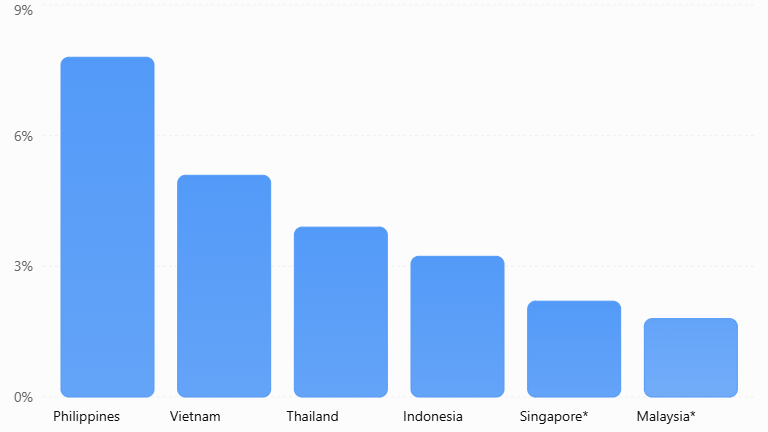
October 2026 inflation reached 7.8% in the Philippines, compared with 5.1% in Vietnam, 3.9% in Thailand, and 3.2% in Indonesia. Thailand’s inflation was itself a 45-month high, driven largely by energy costs. Yet Philippine inflation was twice as high.
Growth offers little comfort. Philippine GDP expanded just 2.4% in the second quarter, against 8.4% in Vietnam, 6.0% in Malaysia, and 5.9% in Singapore. Worse, newly released figures show Philippine growth slowing further to 2.1% in the third quarter.
Figure 1. Inflation across major ASEAN economies – Year-on-year CPI inflation · October 2026, except September for Singapore and Malaysia
Figure 2. GDP growth across major ASEAN economies – Q2 2026 · Year-on-year real GDP growth