

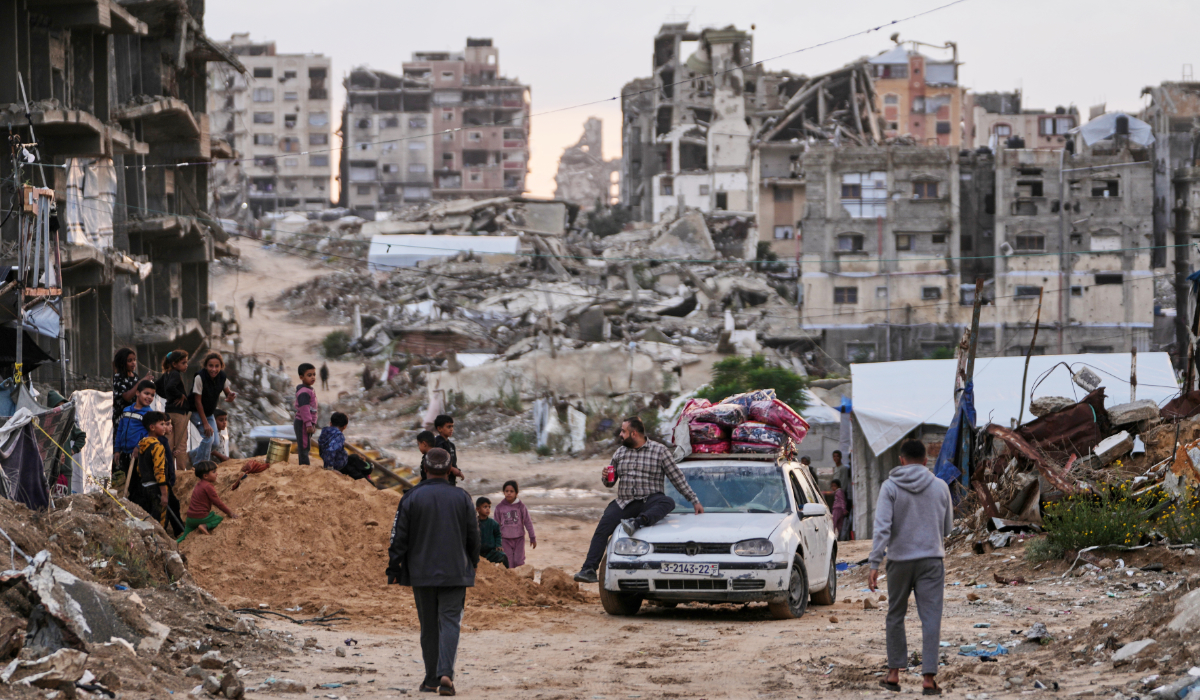
Every day, new footage emerges from Gaza: more explosions, flashes of light illuminating every corner of the Strip, on both sides of the so-called Yellow Line. And every day brings a seemingly endless stream of devastating images, now coupled with scenes of epic proportions: massive floods sweeping away thousands of tents, drowning entire families and destroying what little remains standing in the Strip.
The storm, which began battering Gaza on Nov. 6, devastated displacement camps already ravaged by Israel’s genocide. According to Gaza’s Government Media Office, at least 70,000 tents were flooded within just 12 hours, affecting about 350,000 displaced Palestinians.
And when these dramatic scenes subside, however briefly, Gaza returns to its grim everyday reality: millions of people waiting for salvation, languishing under fragile tents and flimsy plastic tarps that have served as their homes for nearly three years.
We watch them. We report on their suffering, particularly when the news cycle slows down. We call for action. But little action follows. We demand pressure and accountability to force Israel to honor its obligations under the so-called ceasefire agreement by allowing more aid, medicine, construction materials and other essential supplies into Gaza. Yet these demands are met with little meaningful pressure and virtually no accountability.
Ultimately, many of us look the other way. But herein lies the danger.


