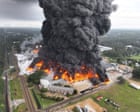
Agency’s Aspect plane once was a key part of tracking toxic chemicals during disasters – why is it now often grounded?
When an ammonia leak outside a hotel in Weatherford, Oklahoma, injured 74 people last November, the federal government’s chemical-detection plane stayed on the ground. It also sat idle during a March fire at a Valero refinery in Port Arthur, Texas, and when blasts at a Toledo, Ohio, recycling plant killed two workers in August.
“Ten years ago, it would have gone to all of them,” said Mark Thomas, a former EPA official who managed the program for 18 years.
Known as Aspect, the plane was designed for emergencies involving toxic chemicals, oil spills and radiation. For two decades, it flew over disasters from Hurricane Katrina to the Deepwater Horizon oil spill.
But since early 2021, the single-engine Cessna has responded to just seven emergencies. Former Aspect scientists told the non-profit newsroom Floodlight that two of those missions – the 2023 East Palestine derailment and the 2025 Smitty’s Supply fire in Louisiana – were badly mismanaged.
At Smitty’s, the EPA declared the air safe, but a former Aspect scientist later found toxic chemicals the agency had missed.