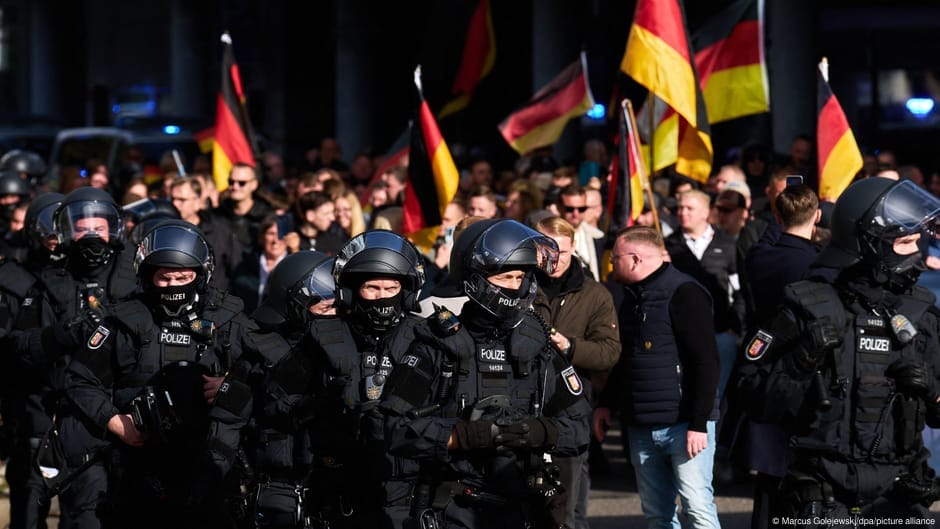
The electoral successes of the far-right Alternative for Germany (AfD) have brought the party closer than ever to taking power in Germany. For the 2029 federal election, she has set herself an ambitious goal: together with her co-chair Alice Weidel, she aims to see Germany's next chancellor come from their party.
This raises an even sharper question: what political ideas does the party stand for, which has been classified by Germany's domestic intelligence agency as a "suspected right-wing extremist" organization and, in several federal states, is already considered "confirmed right-wing extremist"?
Many political scientists have observed that the AfD has become increasingly radicalized since its founding in 2013.
"Viewed as a whole, the AfD is an extreme right-wing party that also displays tendencies associated with a fascist movement," said Fabian Virchow, a researcher on right-wing extremism at Düsseldorf University of Applied Sciences, in an interview with DW.
Virchow identifies different factions and strategic tendencies within the party, some of which are at odds with one another. Party leader Alice Weidel, for example, is generally seen as a proponent of a free-market approach that seeks to keep the state as small as possible. Others, by contrast, favor a strong state shaped by an ethnically homogeneous people, among them Björn Höcke, the influential far-right AfD leader in the state of Thuringia.