

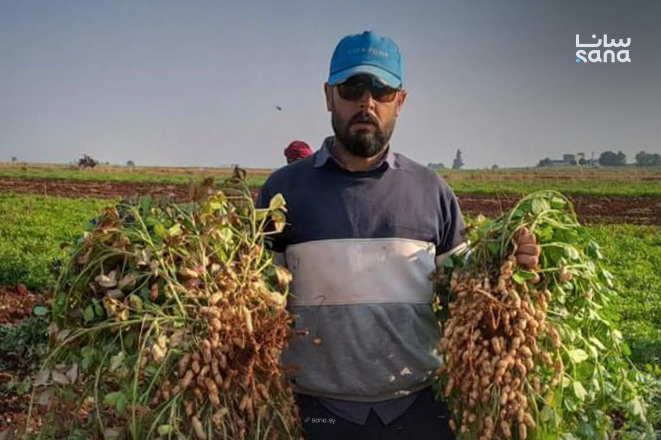
DAMASCUS: Syria’s peanut production this season is expected to reach 17,970 tonnes from 6,256 hectares, according to the Agriculture Ministry.
The Al-Ghab region in Hama accounts for the largest share of cultivated land. However, declining yields, rising production costs and a shortage of specialized harvesting equipment continue to hamper the sector’s development and its potential to become a strategic agricultural commodity.
Peanuts improve soil fertility through nitrogen fixation, supply raw materials for food industries and provide livestock feed. Expanding cultivation and processing could also create opportunities for small businesses, generate higher value products and improve farmers’ returns.
Ali Youssef Diab, supervisor of the peanut group within the Family Projects Group, said that cultivation began with selecting healthy seeds and keeping them in their shells until planting.
Farmers prepare the land through plowing, soil conditioning and fertilization. The optimal planting period extends from early April to May 10, after the risk of spring frost has passed. Planting in March could weaken germination, Diab said.
The crop requires temperatures of 20-25 degrees Celsius during germination and flowering, along with adequate moisture and warm soil.
In coastal areas, peanuts can also be grown as a second-season crop after the wheat and barley harvest in late June and early July, although yields are lower than during the main season.