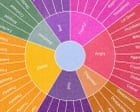
About 10% of people have significant trouble identifying their emotions – which makes it harder to know what to do about them
Naming emotions is a core skill that most people develop as children, and it might seem like second nature. But research indicates that it’s harder than you think – about 10% of the general population have significant difficulty identifying their own emotions.
That’s why a simple tool called the feelings wheel has gained popularity in therapists’ offices and classrooms over recent years.
At first glance, it looks a little like a pie chart: three concentric circles sliced into colored sections, with each region representing a different category of emotion. The innermost circle lists broad core feelings (sad/happy/angry), which split off into gradually more specific sub-emotions in the outer rings (remorseful/proud/humiliated).
Created by US psychologist Dr Gloria Willcox during the early 1980s, the feelings wheel is a tool designed to help people identify and clearly name their emotions, by moving gradually from broad blanket terms to more nuanced ones. The wheel has surged in popularity in recent years, thanks in part to its visual appeal – you can get it as a laminated office poster, as a wooden desk chart on a spin-stand or even stitched onto a cushion.