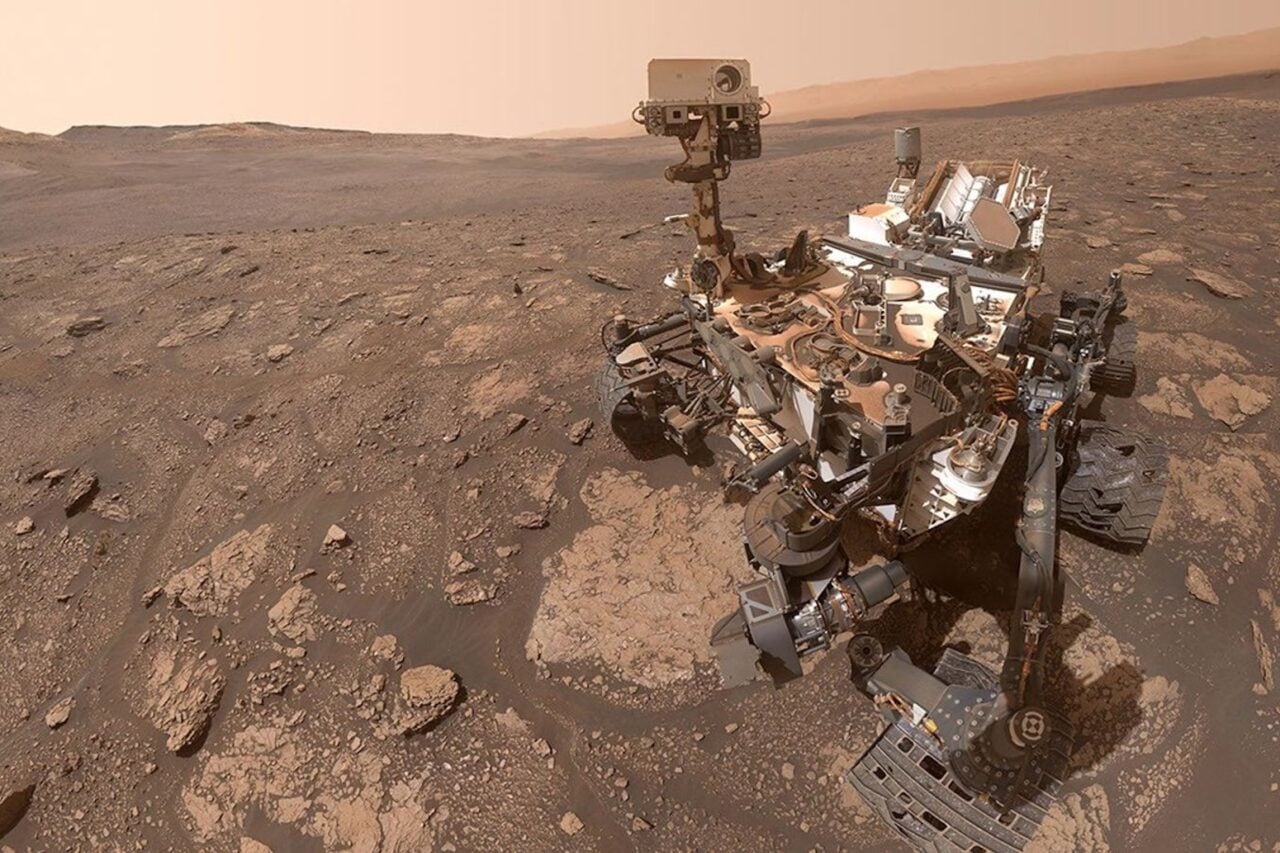
NASA’s Curiosity rover has spent nearly 15 years exploring the Gale crater, a large impact basin just south of the Martian equator. Curiosity has uncovered substantial evidence to suggest that the Gale Crater once held liquid water, but a new analysis of its observations suggests water is present there today—albeit in a starkly different form.
The study, published today in the journal Proceedings of the National Academy of Sciences, analyzed atmospheric carbon dioxide (CO2) data that Curiosity gathered at Gale Crater from 2012 to 2025. According to the researchers, this represents the first long-term record of the isotopic composition of CO2 in Mars’s atmosphere. Their analysis uncovered evidence of a strange yearly phenomenon that points to microscopic traces of thin films of water at the surface of the Gale Crater region or clinging to soil grains underground.
“It has been fun to see where this work has led us. We’re following the water again!” lead author Heather Franz, an isotope geochemist at NASA’s Goddard Space Flight Center, told Gizmodo in an email. “This is not what anyone expected when we began these measurements at the start of the mission.”
The ratios of carbon and oxygen isotopes in the atmospheric CO2 of Mars can offer clues to where water may exist on the surface.