

Since taking on the job as the European Union's foreign policy chief, Kaja Kallas has dealt with her fair share of setbacks, rebuffs and snubs.But this one particularly stung.Last week, Kallas flew to Dublin to attend an informal summit of leaders and make a forceful pitch to become the special European envoy for the ongoing negotiations to end Russia's full-scale invasion of Ukraine.She framed her argument to leaders as self-evident: you chose me for this."In June 2024, there was a decision by the leaders (on) who is representing (the EU) when it comes to security and foreign policy. And it was the discussion that in these five years there is going to be a negotiation with the Russians," she said, referring to the division of top jobs at the start of the legislature."If the leaders want to change that agreement, of course, they may, because it is the leaders' decision, but I think we should focus our energy actually on the substance."But leaders were unmoved and dismissed her pitch outright. According to people familiar with the closed-door discussions, Italian Prime Minister Giorgia Meloni argued that Kallas lacked the institutional weight and discouraged her candidacy.The summit concluded with an expanded joint European team for the negotiations with a grand total of seven representatives. None of them was Kallas.Adding insult to injury…
After peace talks snub, Kallas faces reproach and uncertain future
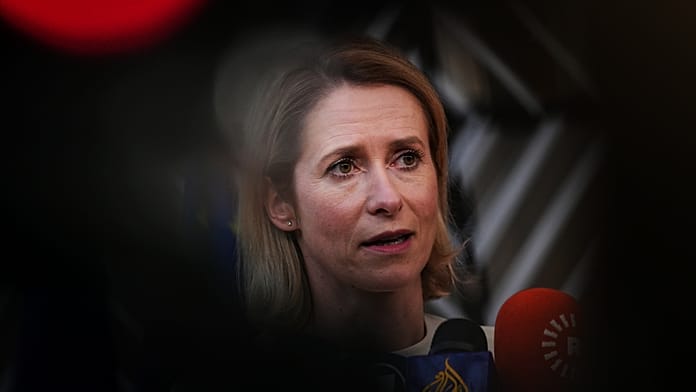
The glaring exclusion of High Representative Kaja Kallas from the Ukraine-Russia peace talks has raised uncomfortable questions about the relevance of her job. Defiant but isolated, Kallas stands by her words.
In brief
Since taking on the job as the European Union's foreign policy chief, Kaja Kallas has dealt with her fair share of setbacks, rebuffs and snubs.But this one particularly stung.Last week, Kallas flew to Dublin to attend an informal summit of leaders and make a forceful pitch to become the special European envoy for the ongoing negotiations to end Russia's full-scale invasion of Ukraine.She framed her argument to leaders as self-evident: you chose me for this."In June 2024, there was a decision by the leaders (on) who is representing (the EU) when it comes to security and foreign policy.
This is the opening of the story, shared with credit to Euronews. The rest of the report — with every detail — continues on the publisher’s website.
Continue reading at Euronews ↗