

An open-air photography exhibition has opened in the garden of Hungary's National Museum of work taken during the 1956 revolution by Swedish photojournalist Anders Engman.Engman portrayed the historic days with exceptional sensitivity, and he also took one of the famous portraits of Erika Szeles, who was killed in the fighting at the age of 15."The images he shot in Budapest, in Győr, along the Hungarian-Austrian border and later in the refugee camp in Austria are today not only key documents of the revolution but also of the history of international press photography," said Zsuzsanna Szabados-Jámbor, deputy director-general of the Hungarian National Museum.At the opening ceremony, Engman's widow said that he arrived in Hungary, almost like a child, at the age of 23; and although in the following decades he travelled the world and worked in more than 100 countries, the revolution remained his most important work."When he was asked what had influenced him the most and what was the most important thing he had ever done, he always immediately replied: Budapest, 1956," recalled Inga-Britt Liljeroth.One of the most striking photographs in the exhibition shows artist Tibor András drawing on the shot-up Grand Boulevard.The painter and war correspondent’s son recalled the events of 70 years ago as follows:"My mother locks the door because my father wants to go out to draw…
Reporting a revolution: Anders Engman's 1956 Hungarian uprising photos on show in Budapest
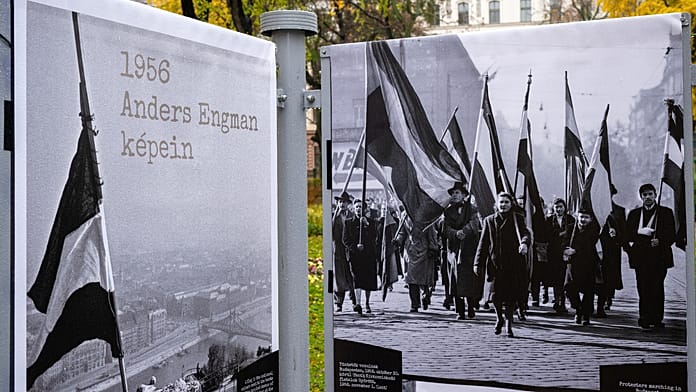
At 23, Anders Engman entered the revolution as a reporter for a Swedish weekly. He worked in over 100 countries, but saw covering the 1956 Hungarian events as his key work.
In brief
An open-air photography exhibition has opened in the garden of Hungary's National Museum of work taken during the 1956 revolution by Swedish photojournalist Anders Engman.Engman portrayed the historic days with exceptional sensitivity, and he also took one of the famous portraits of Erika Szeles, who was killed in the fighting at the age of 15."The images he shot in Budapest, in Győr, along the Hungarian-Austrian border and later in the refugee camp in Austria are today not only key documents of the revolution but also of the history of international press photography," said Zsuzsanna Szabados-Jámbor, deputy director-general of the Hungarian National Museum.At the opening ceremony, Engman…
This is the opening of the story, shared with credit to Euronews. The rest of the report — with every detail — continues on the publisher’s website.
Continue reading at Euronews ↗