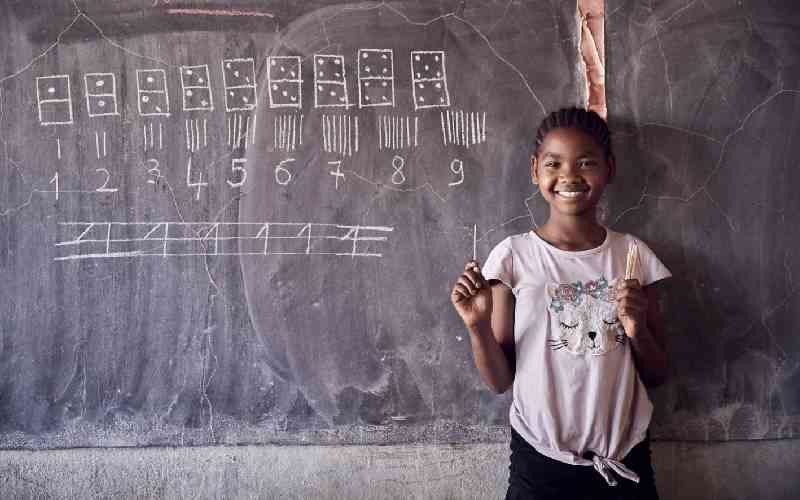
A child can spend years in school yet still struggle to read a simple story or solve a basic mathematics problem. And for millions across Africa, this is their reality, raising a fundamental question: are our education systems doing enough to ensure that being in school actually means learning?
In Kenya, recent learning assessments have highlighted persistent gaps in children's foundational literacy and numeracy skills – a challenge shared across Eastern and Southern Africa, where about 9 in 10 children are unable to read and understand a simple text by age 10. These are not simply education statistics. They represent children at risk of falling further behind, with consequences for their future opportunities and their countries’ development.
Yet there is reason for optimism. The latest findings from the Foundational Learning Action Tracker (FLAT), a UNICEF and Hempel Foundation initiative, show that across Africa, governments are increasingly establishing the policies, programmes and systems needed to strengthen foundational learning. The challenge now is to ensure this progress reaches classrooms at all levels of the system, especially at subnational and rural communities.
The 2026 findings draw on data from 52 African countries. Among 14 African countries with comparable data since 2023, the number reporting nationwide use of assessment data to inform foundational learning programmes has risen from just three to 11.