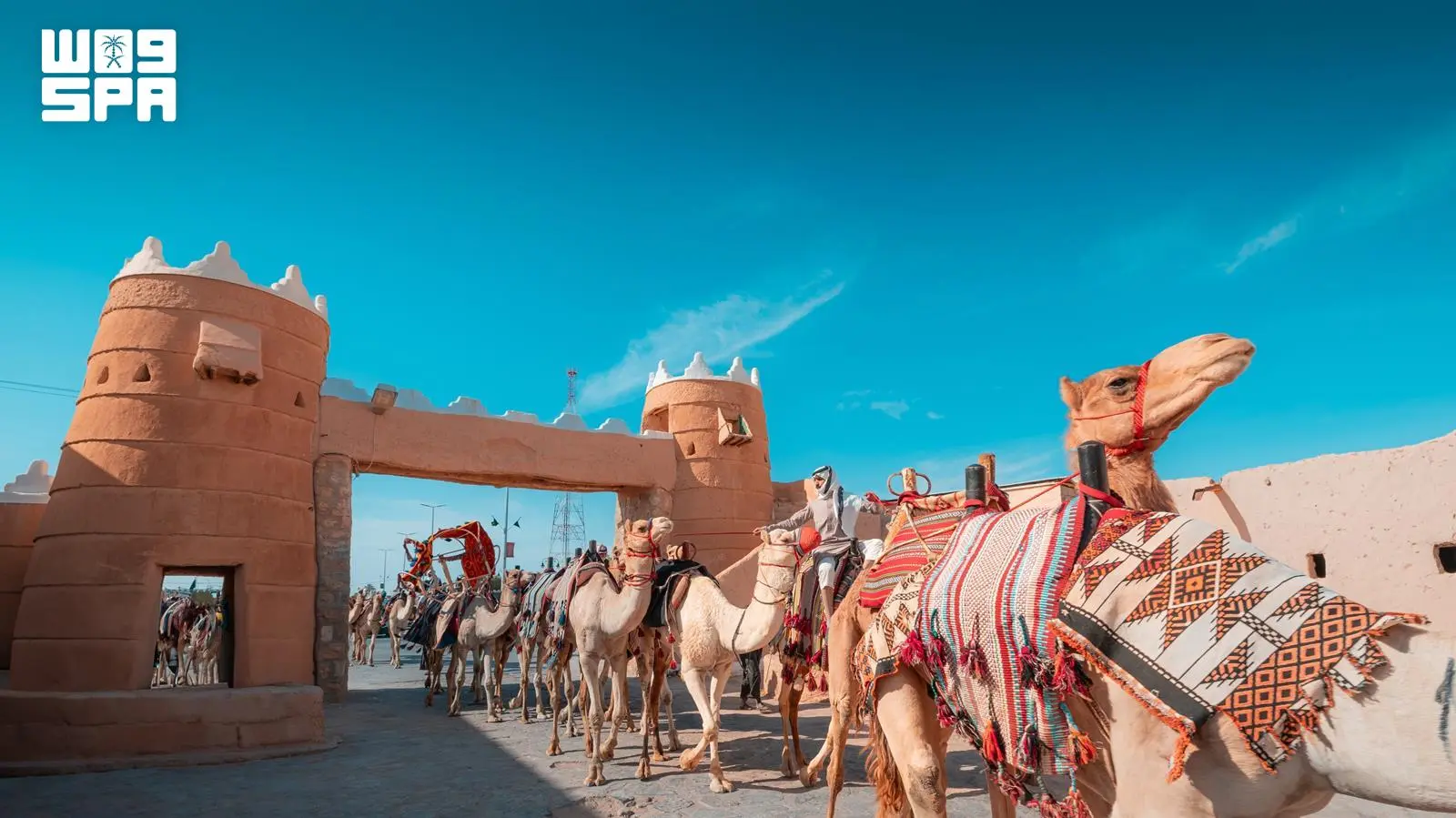
RIYADH: Traditional camel handlers, known locally as hajjana, are keeping alive centuries-old practices that were once essential to travel and trade across the Arabian Peninsula, as Saudi Arabia continues to develop camel racing as a competitive sport.
In Rafha, northern Saudi Arabia, the handlers recreate the journeys of ancient Arabian caravans, demonstrating skills in guiding, riding and managing camels that have been passed down through generations.
Historically, camels were central to transportation, trade and daily life, allowing communities to travel long distances across challenging desert landscapes.
During traditional treks, the hajjana lead caravans on foot or ride camels, ensuring the animals move in an orderly manner while demonstrating techniques developed over centuries.
Dressed in traditional clothing, the handlers accompany camels decorated with saddles, colorful coverings and ornaments, recreating scenes that were once common across the Arabian Peninsula.
Today, these traditions remain part of cultural festivals and national celebrations, highlighting the camel’s enduring place in Saudi identity.
Beyond heritage preservation, camel racing has developed into an organized competitive sport, supported by the Saudi Camel Federation through tournaments, sporting initiatives and efforts to expand participation.
The federation has worked to raise the sport’s standards and strengthen its international profile in line with Saudi Vision 2030, while creating opportunities for a new generation of competitors.