Cities cover just 3 per cent of the Earth’s land yet produce 75 per cent of carbon emissions. In Shenzhen, Prof. Peter Russell of Tsinghua SIGS says designing buildings to be taken apart and reused means “the total life cycle impact of the building can be much less in terms of its ecological footprint.”In Guangzhou, a near-zero-energy skyscraper uses the river breeze. “If we turn off the air conditioning and open all the vents, the river breeze alone is enough to ventilate the entire building,” says Bai Wenhui, Chief Engineer, CCFED Sci-Tech Innovation Building.
Robots and river breezes: how China is greening its cities
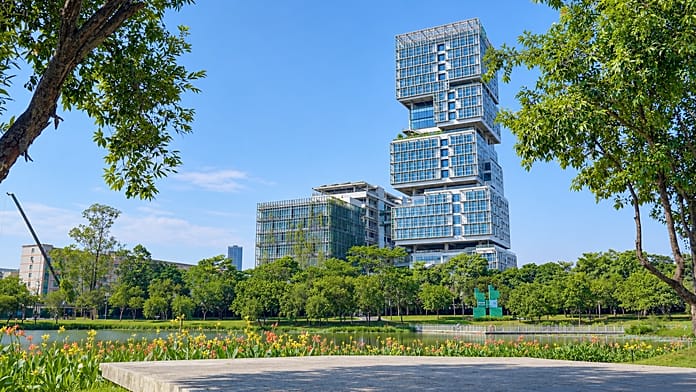
From a Shenzhen lab designing buildings to be taken apart and reused to a Guangzhou skyscraper cooled by river breezes, China is testing how to cut carbon from the buildings that drive city emissions, as it works towards net zero by 2060.
In brief
Cities cover just 3 per cent of the Earth’s land yet produce 75 per cent of carbon emissions. Peter Russell of Tsinghua SIGS says designing buildings to be taken apart and reused means “the total life cycle impact of the building can be much less in terms of its ecological footprint.”In Guangzhou, a near-zero-energy skyscraper uses the river breeze. “If we turn off the air conditioning and open all the vents, the river breeze alone is enough to ventilate the entire building,” says Bai Wenhui, Chief Engineer, CCFED Sci-Tech Innovation Building.
This is the opening of the story, shared with credit to Euronews. The rest of the report — with every detail — continues on the publisher’s website.
Continue reading at Euronews ↗