📰 Newspapers

Winter rains deepen Gaza crisis amid restricted access and aid cuts

Winter rains deepen Gaza crisis amid restricted access and aid cuts

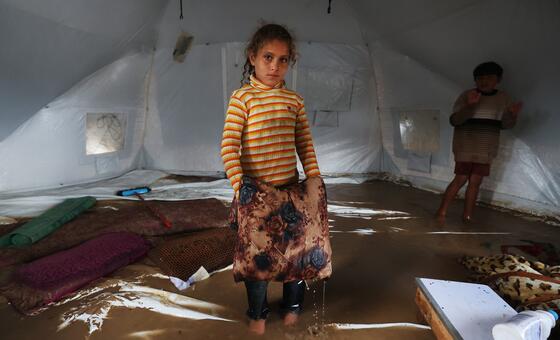
Gaza is facing a deepening shelter, sanitation and food security crisis as winter rains flood makeshift shelters, destroy scarce food supplies and leave displaced families struggling to stay warm and fed.

“Most people burn rubbish to cook their food. Now even the rubbish is wet,” warned Shaun Hughes, World Food Programme (WFP) country director for Palestine.

Briefing journalists in Geneva on his visit to the Strip last week, he described how floodwater and sewage had destroyed food stocks stored in tents while cooking gas and firewood are unavailable or unaffordable.

The scale of the damage has increased fears about how displaced families will withstand the winter months ahead.

“After just one day of rain, tens of thousands of shelters were damaged or destroyed,” said Karl Baker, regional crisis coordinator for the UN International Organization for Migration (IOM).

At least five people were killed by a collapsed sand bank just over a week ago and humanitarian partners reported that two children had died in fires started accidentally by families trying to stay warm by cooking inside their tents, Mr. Baker added.

The UN’s food and migration agencies warn that critical funding shortfalls and continued restrictions on humanitarian aid deliveries are putting additional pressure on an already fragile response. More than 1.7 million Gazans remain displaced and 1.4 million face acute hunger.
In brief

Gaza is facing a deepening shelter, sanitation and food security crisis as winter rains flood makeshift shelters, destroy scarce food supplies and leave displaced families struggling to stay warm and fed. “Most people burn rubbish to cook their food. Now even the rubbish is wet,” warned Shaun Hughes, World Food Programme (WFP) country director for Palestine.

This is the opening of the story, shared with credit to UN News. The rest of the report — with every detail — continues on the publisher’s website.

Continue reading at UN News ↗

Cookie settings

Choose which cookies we may use. You can change this at any time from Cookie settings in the footer. Details of each cookie are in the Cookie Policy.

Strictly necessary

Needed for sign-in, security, payments and remembering these choices. Always on.

Preferences

Remember settings such as dark mode.

Analytics & performance

Help us count visits, understand which pages, devices and countries our readers use, and measure how well the site performs – anonymous and aggregated.

Advertising & marketing

Lets advertising partners show and personalise adverts, measure impressions, clicks and visits, prevent ad fraud and pay us – this is how the free site is funded.

🔔 News notifications

Get headlines from NewsHub on this device — even when the site is closed.

You can switch this off at any time. Works on Android, Windows, Mac and Linux browsers; on iPhone/iPad add the site to your Home Screen first.