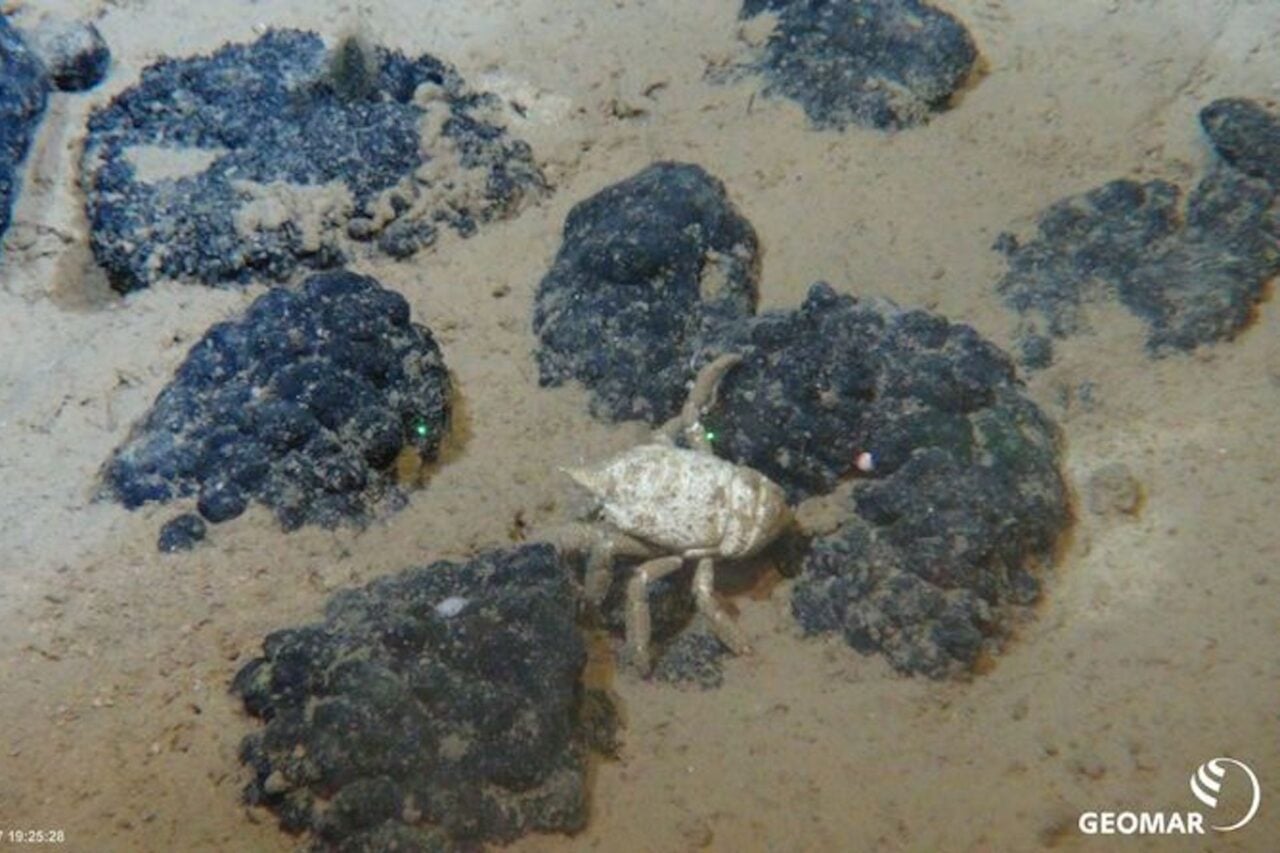
At the bottom of the Pacific Ocean, seemingly unremarkable, stone-like formations are hiding a surprisingly rich ecosystem. Known as polymetallic nodules, these mineral deposits are home to a variety of tiny marine animals, according to new research. Those same rocks are also a source of critical metals, making them a target for a burgeoning deep-sea mining industry.
In a recent study published in Scientific Reports, researchers report thousands of microscopic animals hidden among the crevices of polymetallic nodules in the Clarion-Clipperton Zone in the central Pacific Ocean. The nodules provide a unique habitat that’s different from the surrounding environment and may play a crucial role in the survival of certain species.
The findings shed light on the nodules’ contribution to deep-sea biodiversity and the potential risks of future commercial mining.
Polymetallic nodules are tiny geological formations that sit on the ocean floor, generally between 13,000 and 21,300 feet (4,000 and 6,500 meters) below the surface. They begin forming around a tiny central nucleus, which could be a fragment of rock, a shell, a fossil, or even a shark tooth. Over time, dissolved metals in seawater gradually accumulate around this nucleus, creating successive layers of iron and manganese minerals.
These potato-shaped, rock-like formations grow at an incredibly slow pace, taking millions of years to form.