Human civilization is currently profoundly unsustainable. Earth has already crossed seven of the nine planetary boundaries critical for sustaining life, including climate change, ocean acidification and biosphere integrity.
If economies and societies keep to business as usual, the Earth's vital processes will continue to be thrown wildly out of balance, threatening the future of humanity.
It's now largely accepted that if humans are to have any chance of slowing global warming and nature loss, those social and economic models must change. That's where the idea of green growth comes in.
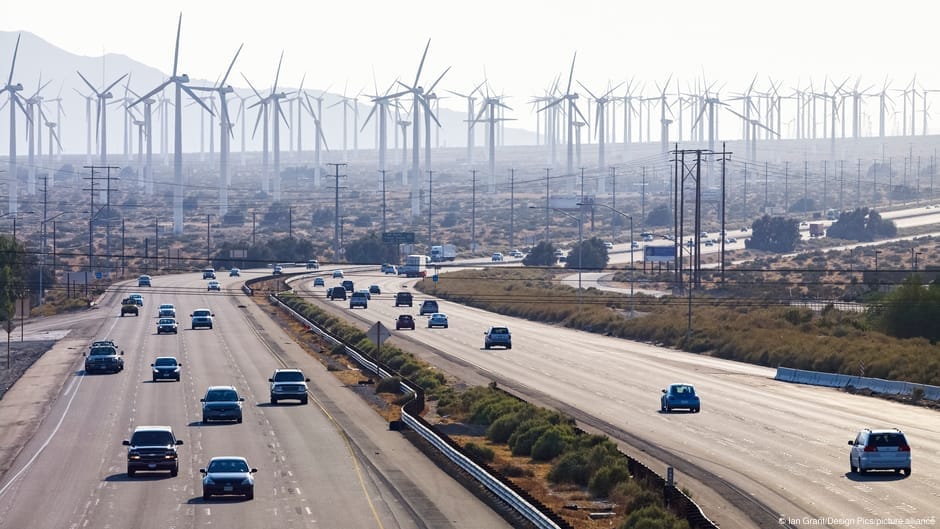
Its promise is to keep growing the economy while reducing emissions and resource use. That involves, for instance, running factories, businesses and homes on wind, solar and other green energy instead of coal and gas, replacing gas-fired furnaces with heat pumps and recycling and reusing resources and raw materials.
"Basically, the idea is: business as usual, but with more sustainable technologies," said Helmut Haberl, a social ecology professor at BOKU University in Vienna. Along with his colleagues in 2020, he published a major report evaluating more than 800 studies on green growth.
In principle, the world's economic output could continue to grow in the long term and generate significantly fewer emissions from the burning of fossil fuels like coal, oil and gas.