📰 Newspapers

[OPINION] Pax Silica and the erasure of Ayta Hungey ancestral lands

[OPINION] Pax Silica and the erasure of Ayta Hungey ancestral lands

The imbalance is difficult to ignore: the government can move quickly to facilitate investment but takes decades to process Indigenous land claims — an implied dispossession

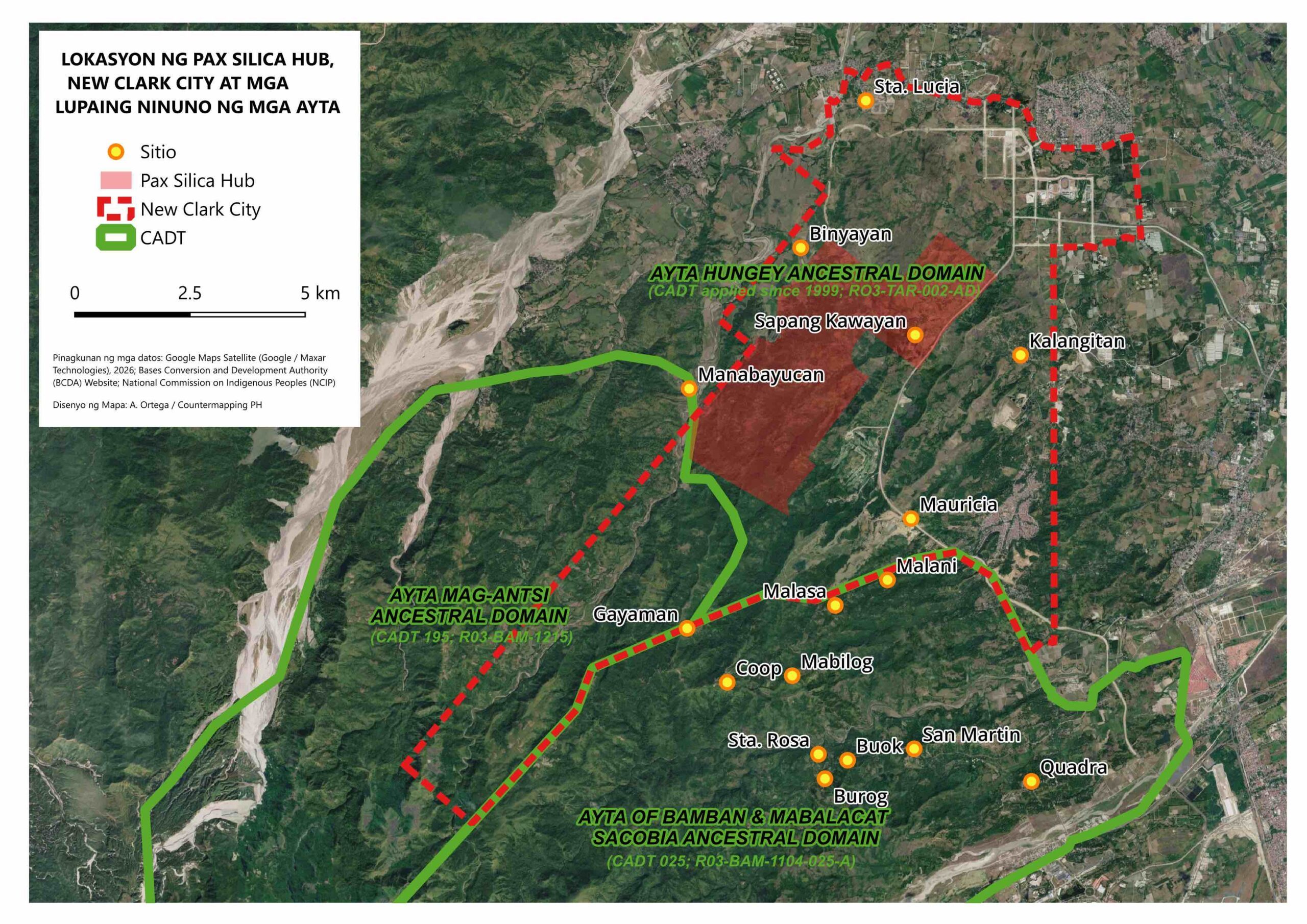
The Philippines is once again being drawn into an American imperial agenda through Pax Silica, a US-led initiative designed to secure semiconductor and critical mineral supply chains. With plans for an artificial intelligence hub in New Clark City, the government is promoting Tarlac as an emerging center of technological innovation and investment.

But amid the excitement over this ambitious project, an important question remains largely unanswered: What happens to the Indigenous communities whose ancestral lands are caught within these development plans?

I find it troubling that the Bases Conversion and Development Authority (BCDA) continues to assure the public that no Indigenous communities will be displaced by these developments. Such assurances overlook the longstanding ancestral land claims of the Ayta Hungey, whose relationship with this part of Tarlac extends across generations.

Even if no homes are physically demolished, development can still profoundly affect Indigenous communities by restricting access to lands, resources, and places central to their livelihoods and cultural life.

Consequences of bureaucratic delay

At the heart of this issue is the unresolved ancestral domain claim of the Ayta Hungey. Since 1999, the community has pursued a Certificate of Ancestral Domain Title (CADT). Despite repeated submissions and more than two decades of waiting, their application remains unfinished. Meanwhile, large-scale development projects continue to advance across the surrounding landscape.

In brief

The Philippines is once again being drawn into an American imperial agenda through Pax Silica, a US-led initiative designed to secure semiconductor and critical mineral supply chains. But amid the excitement over this ambitious project, an important question remains largely unanswered: What happens to the Indigenous communities whose ancestral lands are caught within these development plans? Such assurances overlook the longstanding ancestral land claims of the Ayta Hungey, whose relationship with this part of Tarlac extends across generations.

This is the opening of the story, shared with credit to Rappler (Philippines). The rest of the report — with every detail — continues on the publisher’s website.

Continue reading at Rappler (Philippines) ↗

Cookie settings

Choose which cookies we may use. You can change this at any time from Cookie settings in the footer. Details of each cookie are in the Cookie Policy.

Strictly necessary

Needed for sign-in, security, payments and remembering these choices. Always on.

Preferences

Remember settings such as dark mode.

Analytics & performance

Help us count visits, understand which pages, devices and countries our readers use, and measure how well the site performs – anonymous and aggregated.

Advertising & marketing

Lets advertising partners show and personalise adverts, measure impressions, clicks and visits, prevent ad fraud and pay us – this is how the free site is funded.

🔔 News notifications

Get headlines from NewsHub on this device — even when the site is closed.

You can switch this off at any time. Works on Android, Windows, Mac and Linux browsers; on iPhone/iPad add the site to your Home Screen first.