

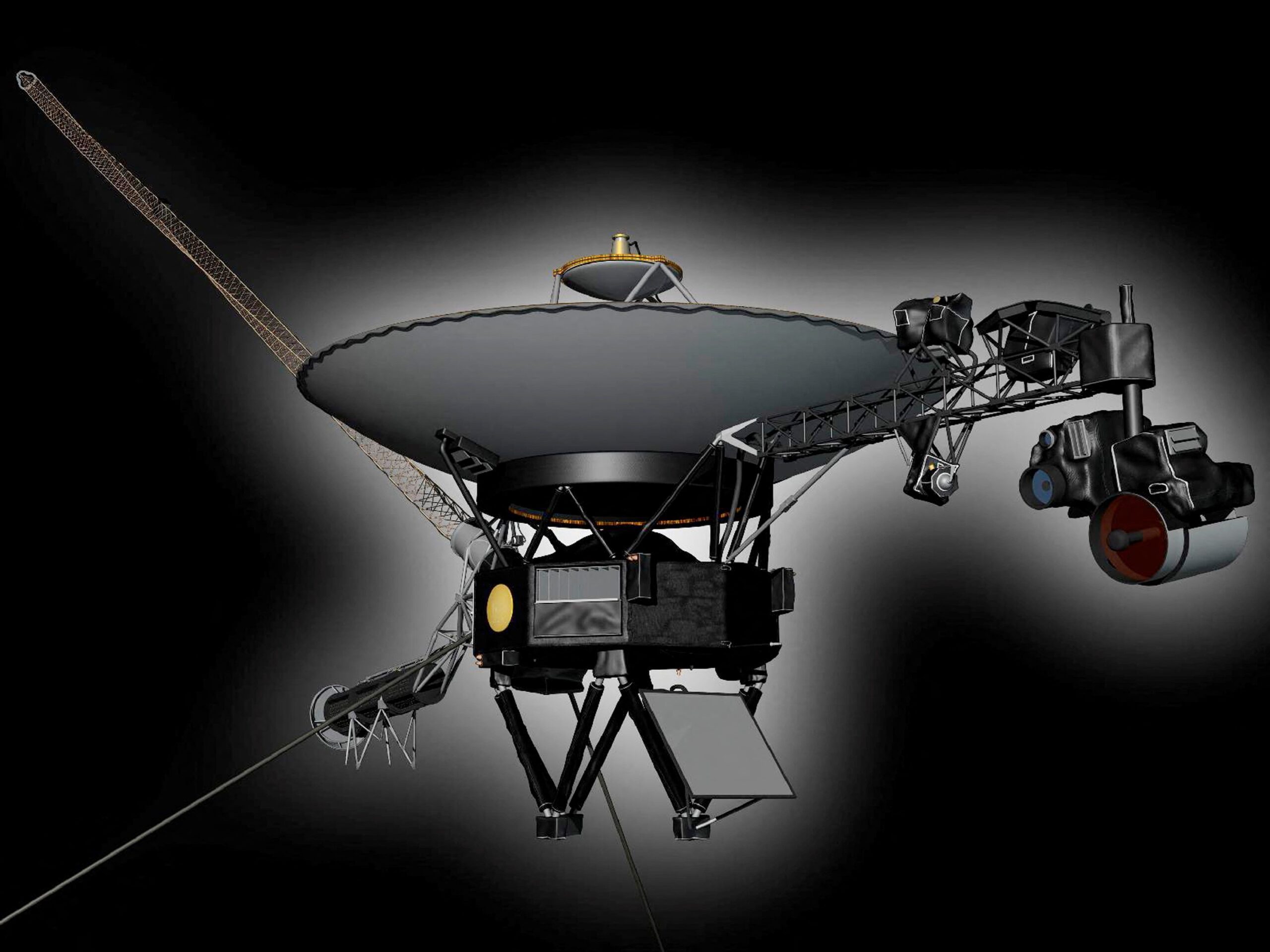
WASHINGTON, DC, USA – NASA’s Voyager 1 probe is believed to have now hit a distance milestone accomplished by no other spacecraft from Earth, based on advance computations by the US space agency, as the probe ventures through the near-emptiness of interstellar space.
The robotic probe, launched in 1977, was calculated by NASA to have reached a light-day from Earth, the distance that light travels in 24 hours — about 16 billion miles (26 billion km) — on Wednesday, November 18, at 5:16 am ET (1016 GMT).
Officials at NASA’s Jet Propulsion Laboratory in California will have to wait about a day to get a signal from the probe, confirming it has reached this distance. They have scheduled an event for Thursday, November 19, to discuss the milestone.
“Reaching one light-day is an astounding feat, one that I never expected to see,” Voyager project manager Suzanne Dodd said.
Voyager 1, the most distant human-made object, is flying at almost 38,000 miles per hour (61,000 kph). It crossed the outer edge of the heliosphere, a protective bubble of particles and magnetic fields produced by the sun, to enter interstellar space in 2012. Its twin, Voyager 2, was also launched in 1977 and entered interstellar space in 2018.