It traveled more than 49 years to get to this point, and its journey isn’t done yet.
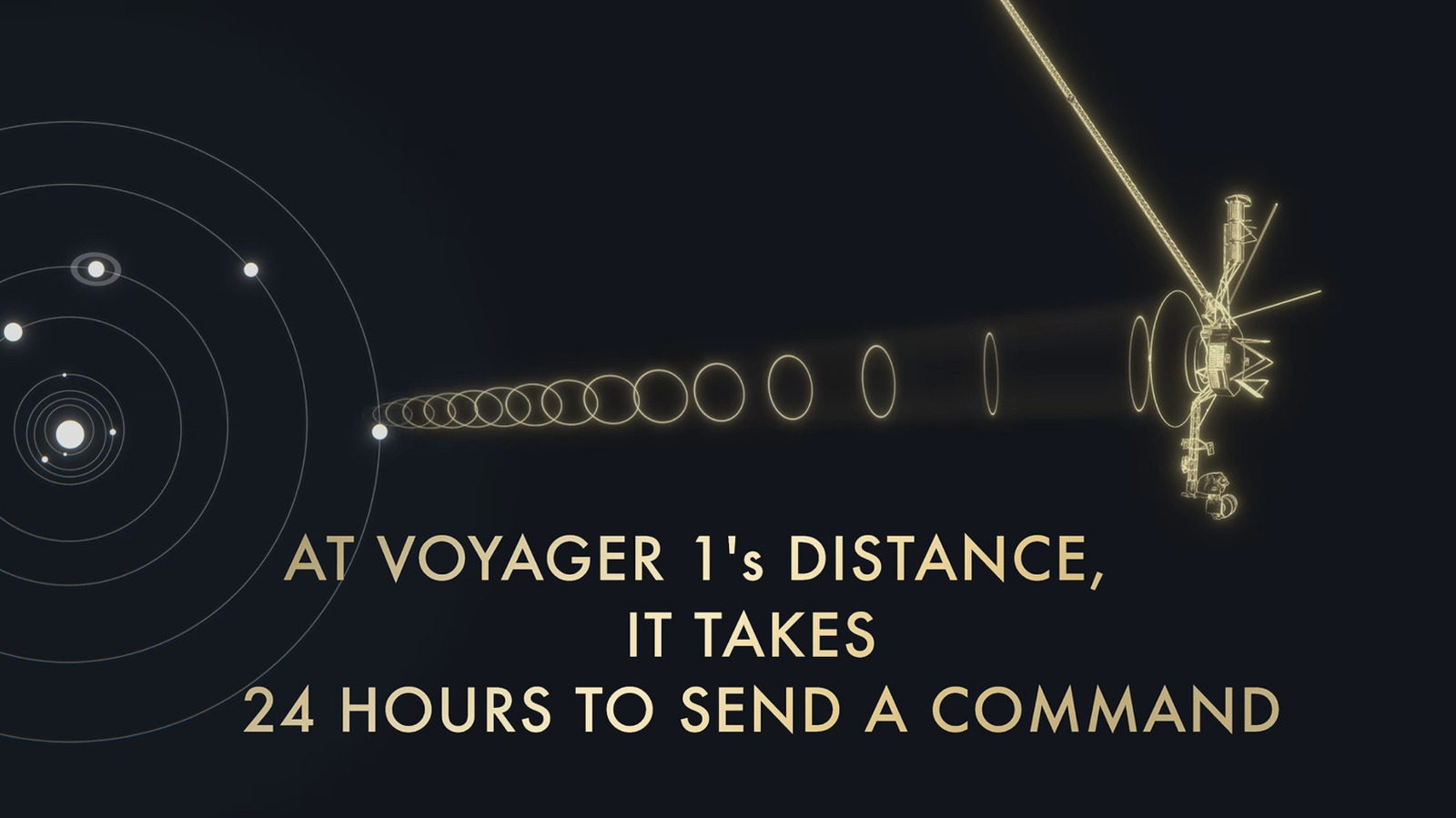
If NASA's estimates are correct, Voyager 1 is already one light-day away from our planet. NASA expects it to have reached that milestone at 5:16:07 AM Eastern time today, November 18. One light-day is the distance a particle of light can travel in a day. Since radio waves travel at the speed of light, it now takes 24 hours to send a command to the probe and 24 hours to get a message back. That's why NASA won't be able to confirm exactly what time it reached one light-day away until tomorrow, when the probe's message arrives.
"It's never happened before, and it may never happen again — it's that kind of extraordinary," said Voyager mission manager Kareem Badaruddin.
Voyager 1 headed to space in 1977 as part of NASA's program to study not just our Solar System, but also interstellar space. It was launched 16 days after Voyager 2, but it has since traveled farther than its twin and any other probe we've sent out. Voyager 1 reached interstellar space — that's the region between star systems — back in 2012, before Voyager 2 did.