📰 Newspapers

India: Online censorship grows after 'Cockroach' protests

India: Online censorship grows after 'Cockroach' protests

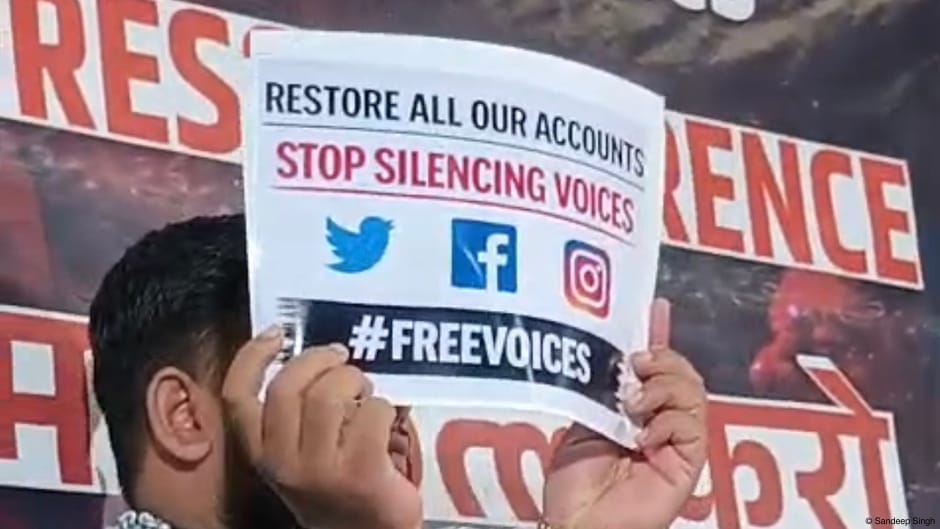
Since anti-government Cockroach protests erupted, journalists and creators say their content is increasingly being restricted on social media in India.

A video showing a young girl crying as she spoke about alleged police brutality during the youth-led Cockroach Janata Party (CJP) protests in July. A video examining the Hindu nationalist Rashtriya Swayamsevak Sangh's (RSS) contribution to the rise of India's ruling Bharatiya Janata Party (BJP). A satirical cartoon criticizing Prime Minister Narendra Modi's government.

These are among the examples of content that have recently been restricted on social media in India.

Content creator CitySavitri describes herself as a "nobody" in the world of social media. She had started making videos just two months ago and had around 600 followers on Instagram.

Yet a video looking at the RSS's role in the BJP's 2014 election victory was restricted in India within an hour of being posted. It was the first of three videos she posted that faced restrictions.

The experience made her feel that "anti-government commentary" was being monitored and curtailed.

"It is very plain and simple to understand," the content creator told DW.

Independent journalist Sadhika Tiwari was covering the CJP protest in New Delhi on July 20, when police used batons and tear gas against demonstrators.

Tiwari's video of a frightened young girl crying and speaking about police brutality garnered around 10 million views within hours, she said, before it was restricted in India.

In brief

A video showing a young girl crying as she spoke about alleged police brutality during the youth-led Cockroach Janata Party (CJP) protests in July. These are among the examples of content that have recently been restricted on social media in India. Tiwari's video of a frightened young girl crying and speaking about police brutality garnered around 10 million views within hours, she said, before it was restricted in India.

This is the opening of the story, shared with credit to DW — Top stories. The rest of the report — with every detail — continues on the publisher’s website.

Continue reading at DW — Top stories ↗

Cookie settings

Choose which cookies we may use. You can change this at any time from Cookie settings in the footer. Details of each cookie are in the Cookie Policy.

Strictly necessary

Needed for sign-in, security, payments and remembering these choices. Always on.

Preferences

Remember settings such as dark mode.

Analytics & performance

Help us count visits, understand which pages, devices and countries our readers use, and measure how well the site performs – anonymous and aggregated.

Advertising & marketing

Lets advertising partners show and personalise adverts, measure impressions, clicks and visits, prevent ad fraud and pay us – this is how the free site is funded.

🔔 News notifications

Get headlines from NewsHub on this device — even when the site is closed.

You can switch this off at any time. Works on Android, Windows, Mac and Linux browsers; on iPhone/iPad add the site to your Home Screen first.