

Want to bookmark your favourite articles and stories to read or reference later? Start your Independent Membership today.
Navigating the newly planted native flora on the world’s largest wildlife overpass, Beth Pratt paused and raised a hand, asking for quiet.
"Hear that? We're listening to birdsong right now, on top of one of the busiest freeways in the U.S.!" exclaimed Pratt, a key figure behind the project. "That makes my heart glad."
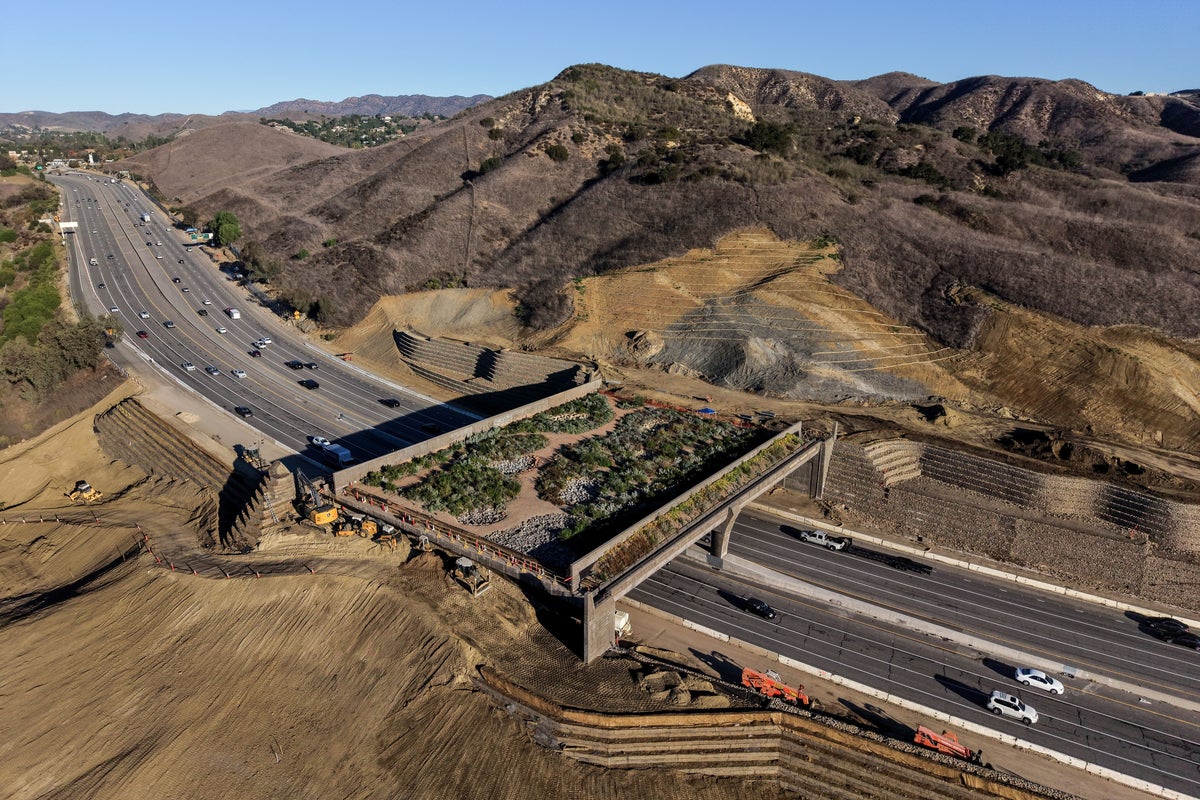
The sounds of birds provided fresh evidence that creatures are already utilizing the structure—which crosses U.S. 101 and an adjacent frontage road around 35 miles (56 kilometers) northwest of downtown Los Angeles—prior to its formal Dec. 2 opening ceremony.
Only two weeks prior, motion-sensor cameras recorded a single coyote, thought to be the first mammal making a safe passage. Shortly after, three young coyotes were filmed playing under the 10-foot (3-meter) sound walls lining the span.
"They don't care about ribbon cuttings," joked Pratt, president of the nonprofit Wildlife Crossing Fund.
Roughly 300,000 vehicles pass daily along this section of highway in Agoura Hills, a municipality situated within a network of protected habitats that the bridge links together. Fences placed along the road direct wildlife toward the passage.
Designed to blend into nearby hills, the 1,250-foot (380-meter) two-section span stretches over the roadway, giving animals restricted by urban…