

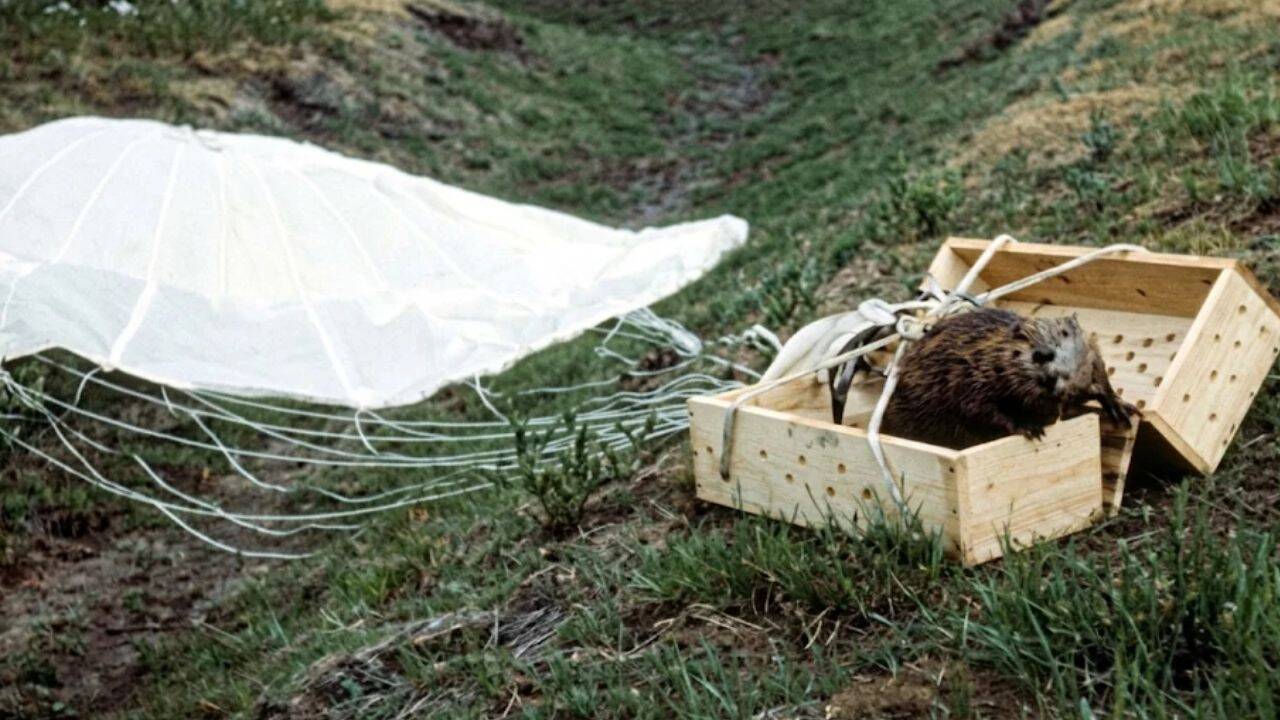
In 1948, Idaho’s Fish and Game Department used an unusual method to move 76 beavers into remote wilderness areas. It dropped them from an aeroplane in boxes suspended beneath parachutes. The operation was intended to solve problems caused by transporting the animals through mountainous, heavily forested country with few roads.Earlier journeys involved trips on horses, mules and trucks, exposing beavers to heat, rough handling and delays. According to Elmo W. Heter’s paper, titled ‘Transplanting Beavers by Airplane and Parachute’, published in the Journal of Wildlife Management, the experiment provided a faster, cheaper, and safer transportation method. Observations made in late 1949 found that the relocated animals had built dams, constructed houses, and stored food.How did Idaho move beavers to remote release sitesIdaho had been moving beavers from places where they were plentiful and could damage irrigation systems, orchards, and other plantings. In the areas where they were released, the animals usually formed colonies, multiplied, and established fur-bearing populations.Heter also noted their contribution to improving habitats for game, fish and waterfowl, as well as watershed conservation. The department selected release sites through its conservation officers, working with the state fur supervisor and local Forest Service officials. The former transport system was difficult in Idaho’s mountains and remote forests.
Idaho dropped 76 beavers from aeroplanes in parachute-equipped boxes in 1948
In brief
In 1948, Idaho’s Fish and Game Department used an unusual method to move 76 beavers into remote wilderness areas. Observations made in late 1949 found that the relocated animals had built dams, constructed houses, and stored food.How did Idaho move beavers to remote release sitesIdaho had been moving beavers from places where they were plentiful and could damage irrigation systems, orchards, and other plantings.
This is the opening of the story, shared with credit to The Times of India — World. The rest of the report — with every detail — continues on the publisher’s website.
Continue reading at The Times of India — World ↗