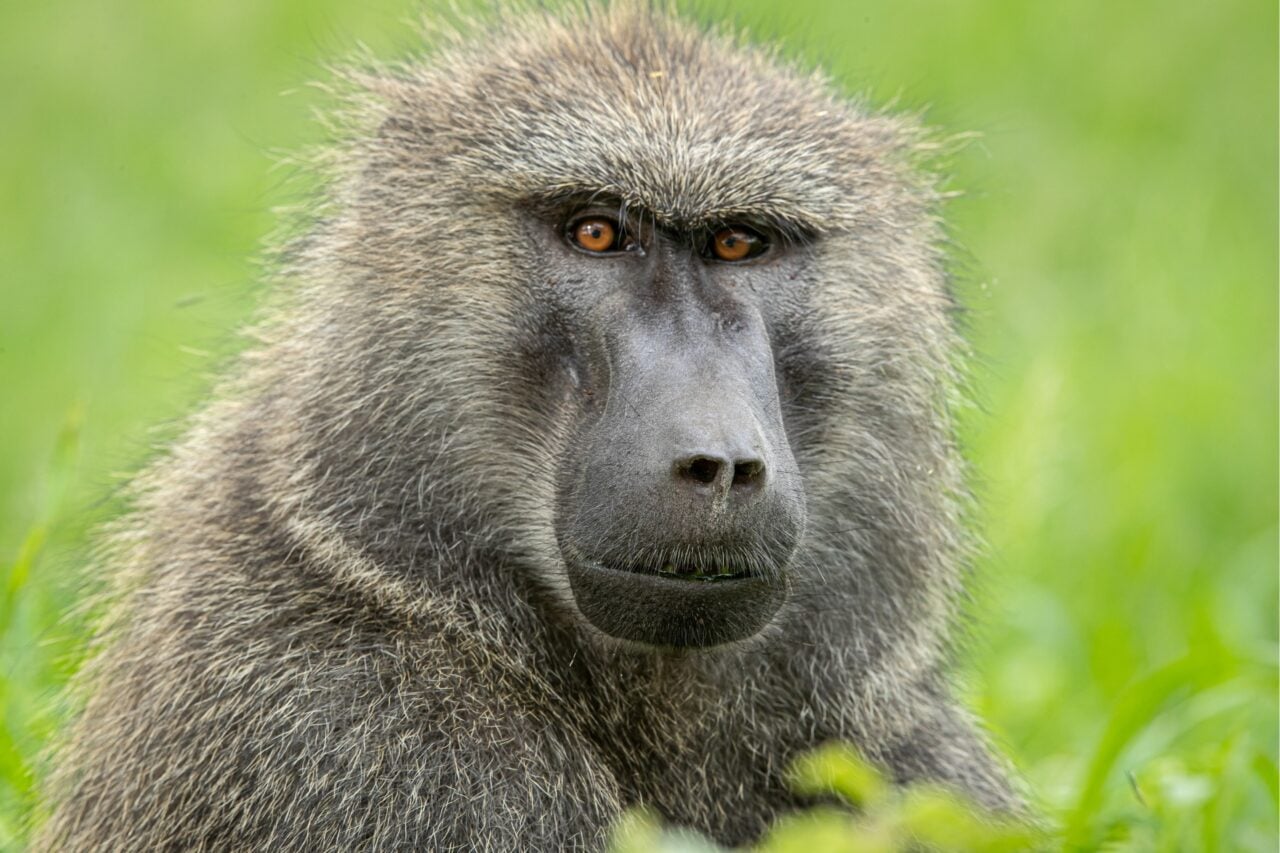
For tens of millions of years, eagles have ruled the skies among the strongest and most formidable birds of prey. These skilled hunters have been known to attack surprisingly large animals, including primates weighing up to 29 pounds (13 kilograms). But a new study shows that eagles are actually capable of taking down even bigger prey, and the findings have interesting implications for human evolution.
Researchers working in the sandstone cliffs of northern Chad discovered skulls and bones of adult male baboons with clear signs of eagle predation: talon punctures to the skull and scrapes across the shoulder bones. After calculating the baboons’ weights, they found that the largest came in at over 57 pounds (26 kilograms). That’s well within the size range of some early hominin species.
If confirmed, the findings—published today in the American Journal of Biological Anthropology—would indicate that some of our ancient ancestors may have been more vulnerable to avian predation than previously thought. This pressure could have played an important role in the evolution of our species.
“At first, the idea of eagles hunting adult male baboons seemed to exist on the thin edge of possibility, until it didn’t,” senior author Nathaniel Dominy, an anthropologist and evolutionary biologist at Dartmouth College, said in a statement. “Our skepticism slowly gave way to acceptance.