

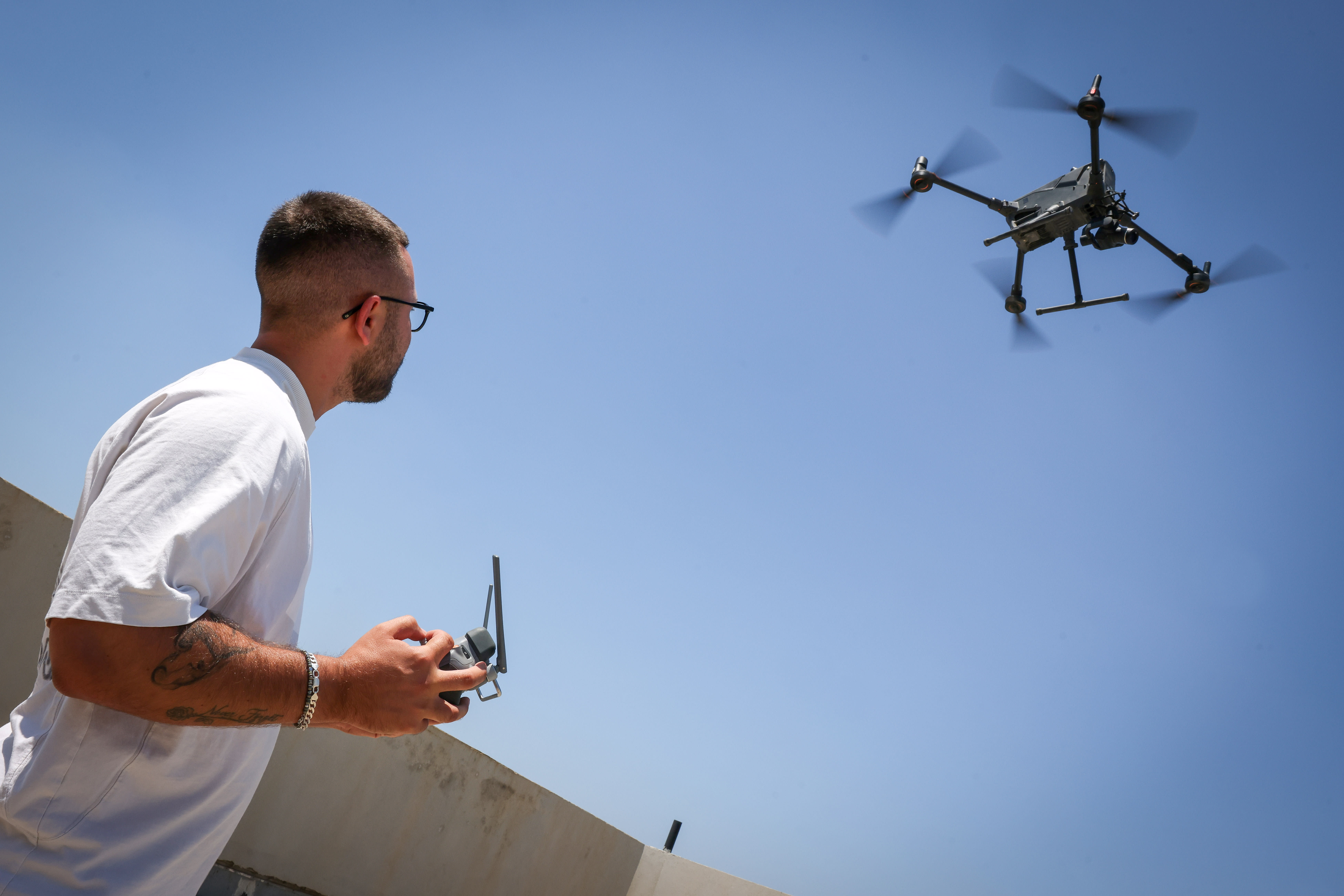
In the global race for the drone market, the question is not who manufactures the most aircraft, but who develops the technology without which they cannot operate.Israel has been associated with unmanned aerial vehicles (UAVs) for decades. This reputation is built on operational experience, major defense industries, systems exported to numerous countries, and deep expertise in the design, operation, and integration of unmanned platforms. Yet in 2026, the ability to build a drone is no longer, in itself, enough to define technological leadership.A modern drone is not simply an aircraft equipped with motors, a battery, and a camera. It is part of a broader ecosystem encompassing autonomy, navigation, sensing, communications, software, cybersecurity, fleet management, and airspace management. Alongside these capabilities, an equally significant layer of technologies is developing for detecting, disrupting, and neutralizing hostile drones. For entrepreneurs, investors, industrial companies, and security organizations, this is not merely a technological or security issue. It represents a business opportunity, as an increasing share of the industry's value is shifting toward the technologies that enable drones to operate safely, autonomously, lawfully, and profitably.Israel's defense exports provide important context for this opportunity. In 2025, Israeli defense exports reached a record $19.2 billion, nearly 30% higher than in 2024.
The race for the drone market and Israel’s window of opportunity - opinion
In brief
In the global race for the drone market, the question is not who manufactures the most aircraft, but who develops the technology without which they cannot operate.Israel has been associated with unmanned aerial vehicles (UAVs) for decades. It represents a business opportunity, as an increasing share of the industry's value is shifting toward the technologies that enable drones to operate safely, autonomously, lawfully, and profitably.Israel's defense exports provide important context for this opportunity.
This is the opening of the story, shared with credit to The Jerusalem Post. The rest of the report — with every detail — continues on the publisher’s website.
Continue reading at The Jerusalem Post ↗


