📰 Newspapers

Red crabs begin annual march to sea on Australia’s Christmas Island

Red crabs begin annual march to sea on Australia’s Christmas Island

The yearly march of the crabs comes when the rainy season hits and the crustaceans move to the sea to breed.

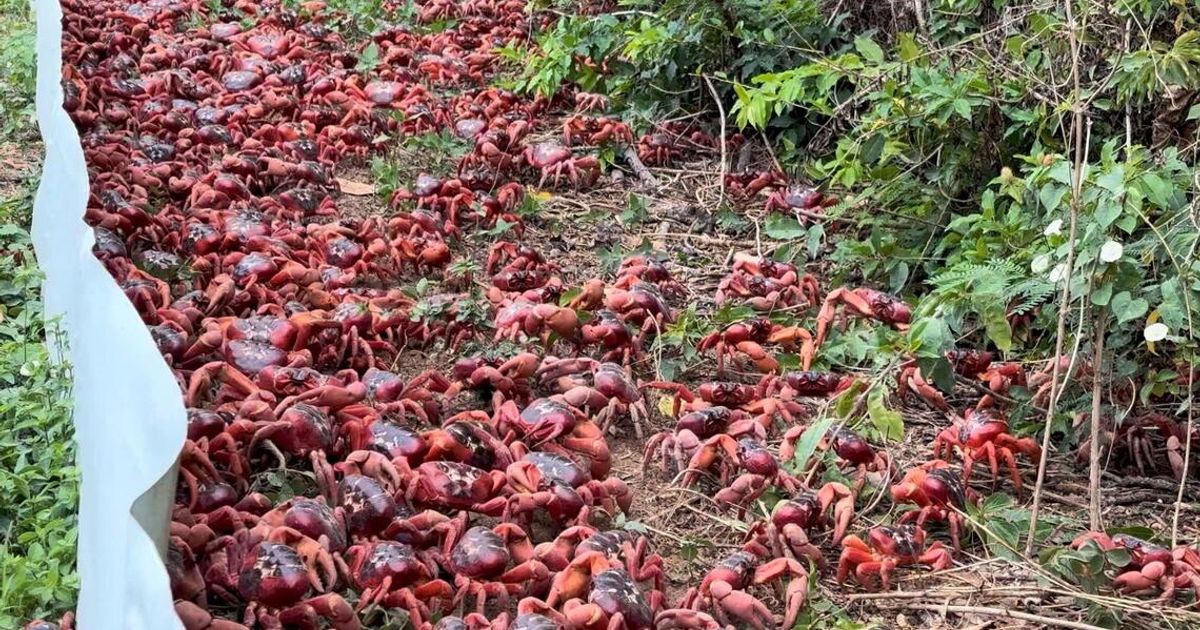
SYDNEY - More than 100 million red crabs on Australia’s Christmas Island have begun their annual migration from the forest to sea, conservationists said this week.

The yearly march of the crabs on the remote territory in the Indian Ocean comes when the rainy season hits and the crustaceans move to the sea to breed.

The timing of their epic migration through forests, across roads and over bridges is tied to lunar cycles – the crabs hope to spawn “before dawn on a receding high tide during the moon’s last quarter”, Parks Australia said.

It requires months of preparation by conservationists on the island, which lies 350km south of Indonesia and more than a thousand kilometres from the Australian mainland.

“People travel from around the world to witness this incredible wildlife spectacle on Christmas Island,” Parks Australia’s Christmas Island National Park Manager Chris Chartres said.

“Ongoing conservation efforts have been crucial to the species’ recovery, particularly work to control yellow crazy ants, one of the biggest threats to red crabs.”

Those efforts have seen the population rebound from around 50 million to the current levels.

“Red crabs are the island’s keystone species,” Chartres said.

“They play a critical role in maintaining the health of the forest, so when the crabs are doing well, the whole ecosystem benefits.” AFP

In brief

SYDNEY - More than 100 million red crabs on Australia’s Christmas Island have begun their annual migration from the forest to sea, conservationists said this week. “People travel from around the world to witness this incredible wildlife spectacle on Christmas Island,” Parks Australia’s Christmas Island National Park Manager Chris Chartres said. “Red crabs are the island’s keystone species,” Chartres said.

This is the opening of the story, shared with credit to The Straits Times — Asia. The rest of the report — with every detail — continues on the publisher’s website.

Continue reading at The Straits Times — Asia ↗

Cookie settings

Choose which cookies we may use. You can change this at any time from Cookie settings in the footer. Details of each cookie are in the Cookie Policy.

Strictly necessary

Needed for sign-in, security, payments and remembering these choices. Always on.

Preferences

Remember settings such as dark mode.

Analytics & performance

Help us count visits, understand which pages, devices and countries our readers use, and measure how well the site performs – anonymous and aggregated.

Advertising & marketing

Lets advertising partners show and personalise adverts, measure impressions, clicks and visits, prevent ad fraud and pay us – this is how the free site is funded.

🔔 News notifications

Get headlines from NewsHub on this device — even when the site is closed.

You can switch this off at any time. Works on Android, Windows, Mac and Linux browsers; on iPhone/iPad add the site to your Home Screen first.