

At the southern tip of Chilean Patagonia, near Cape Horn, the last remnants of a glacier have become the scene of an unexpected discovery. A group of scientists has found a rare insect on Navarino Island, a region where the ice is retreating and revealing a landscape in constant transformation.The discovery is described in a study published in November 2026 in the scientific journal 'Ecology', which analyses ice loss in this area and records the presence of the insect. It is a stonefly, a type of insect closely linked to freshwater ecosystems. It belongs to the family Gripopterygidae, found in different regions of the southern hemisphere.The researchers have not been able to match it to any known species, which raises the possibility that it could be a species not yet described by science. However, further studies will be needed to confirm this.A discovery amid the thawThe find was made next to the remnants of a glacier on Navarino Island, in the Tierra del Fuego archipelago, an area where the loss of ice is changing environmental conditions. Glaciers are not only part of the landscape. Meltwater from them feeds nearby ecosystems and creates particular conditions for numerous organisms. When the ice disappears, these environments also change.For now, it is unknown whether the insect lives exclusively in this area or is also…
Rare stonefly found beside vanishing glacier on Chile's Navarino Island
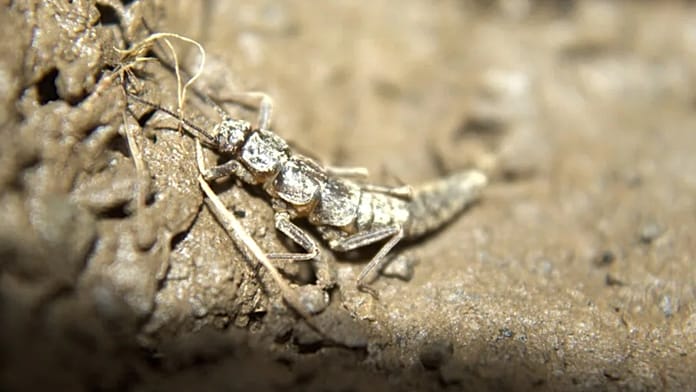
An international team of scientists, including researchers from the University of Barcelona, has discovered a rare insect beside the remains of a glacier in Chilean Patagonia.
In brief
At the southern tip of Chilean Patagonia, near Cape Horn, the last remnants of a glacier have become the scene of an unexpected discovery. A group of scientists has found a rare insect on Navarino Island, a region where the ice is retreating and revealing a landscape in constant transformation.The discovery is described in a study published in November 2026 in the scientific journal 'Ecology', which analyses ice loss in this area and records the presence of the insect. It is a stonefly, a type of insect closely linked to freshwater ecosystems.
This is the opening of the story, shared with credit to Euronews. The rest of the report — with every detail — continues on the publisher’s website.
Continue reading at Euronews ↗