

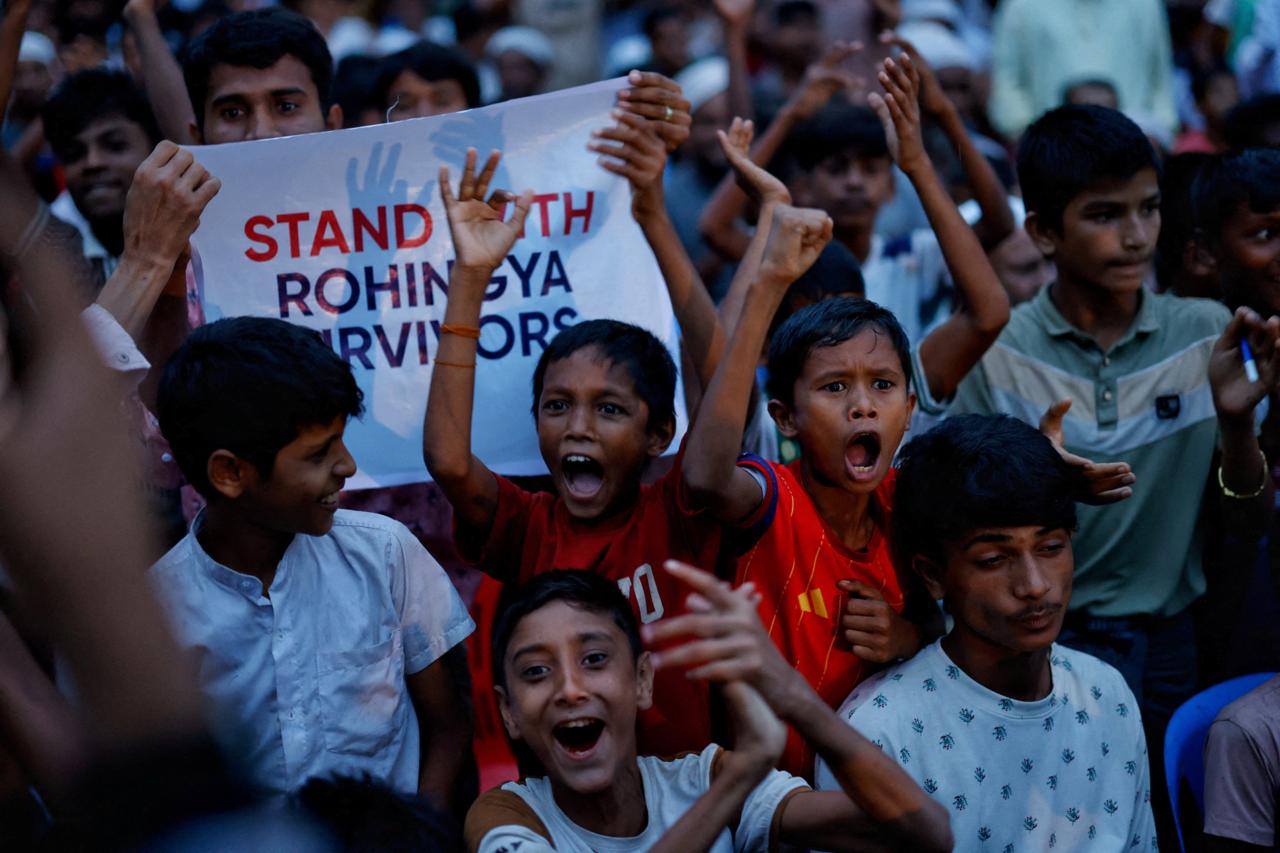
Yesterday, November 19, the International Court of Justice in The Hague ruled, by nine votes to six, that Myanmar is responsible for having committed a genocide against the Rohingya in 2017, and had also failed to investigate and prosecute those responsible.
In the landmark ruling, which came seven years after the case was filed, the court ordered Myanmar must provide restitution and compensation to the victims of its “clearance operations” in Rakhine State in 2017.
It is the first time since the adoption of the UN genocide convention in 1948 that the court has found a state responsible for committing genocide.
Must Read
Top UN court finds Myanmar committed genocide against Muslim Rohingya
Why the case matters
Twice before, however, the ICJ has ruled on the merits of a genocide claim.
In 2007, the court found Bosnian Serb forces had committed genocide at Srebrenica in 1995 during the Bosnian War, but that Serbia itself was not responsible for it. It concluded instead that Serbia had failed to prevent the genocide and punish those responsible.
And in 2015, the ICJ dismissed Croatia’s claim and Serbia’s counter-claim over crimes committed during the conflict after the breakup of Yugoslavia in the 1990s. The court found serious crimes had occurred, but there was not the intent to destroy a group that genocide requires.