

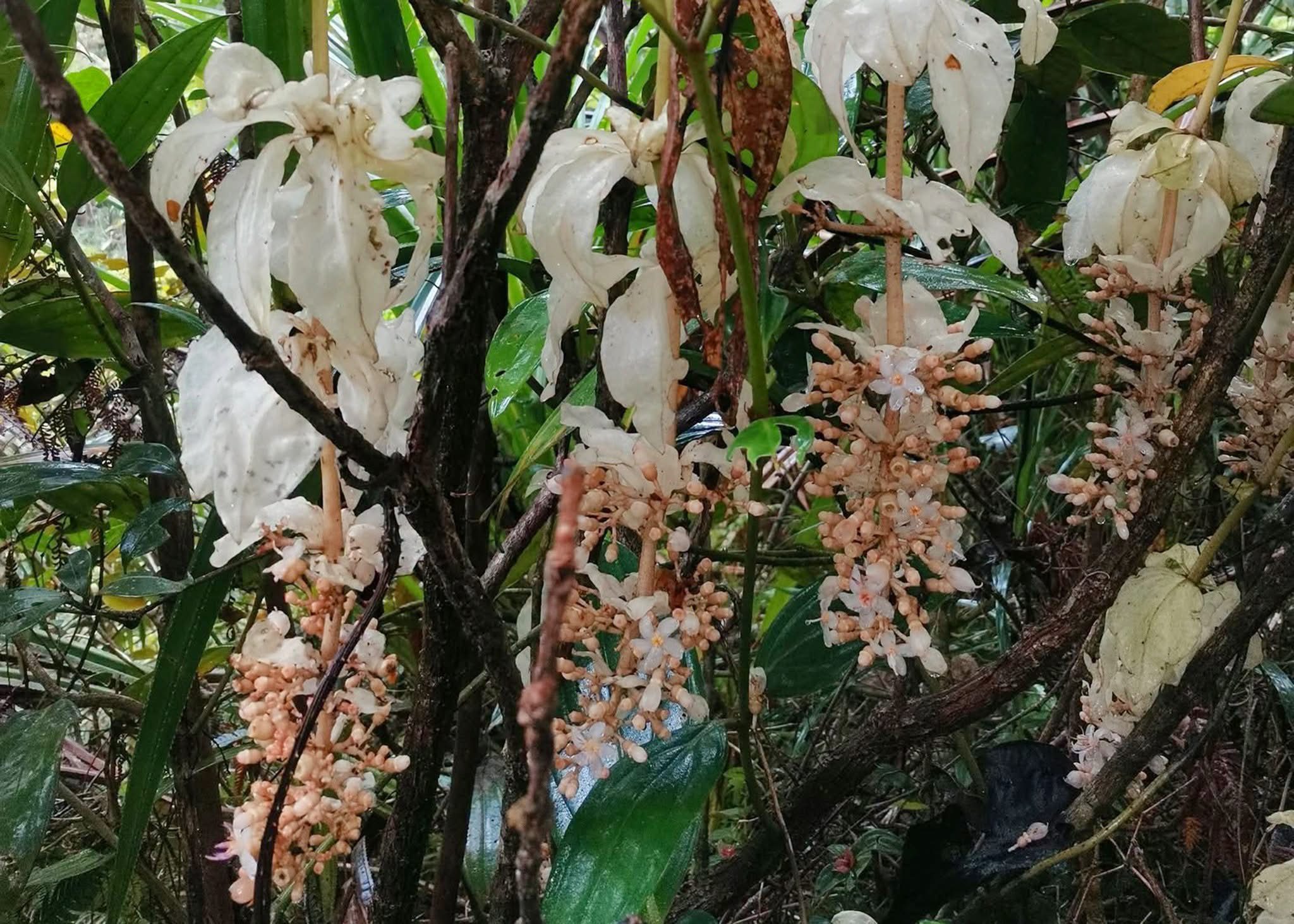
BAGUIO, Philippines – It was not hiding. In fact, the flowering plant is common in the forest where researchers found it. Yet botanists had overlooked it for centuries.
Now, a team of scientists has officially identified the plant as Medinilla bulutiorum, a species new to science from the forests of Calanasan, Apayao.
The “discovery,” published Wednesday, November 18, in the international scientific journal Phytotaxa, adds another species to the growing list of botanical finds from a province whose forests continue to reveal how much remains undocumented.
Researchers recorded the plant in Barangay Eva Puzon, where it grows in lower montane forests at elevations of approximately 700 to 900 meters.
The study was authored by Jiro T. Adorador, Zhereeleen D. Meneses-Adorador, Breiden Dela Cruz, Sarah Mae C. Batil, Jayson C. Ibañez, and J. Peter Quakenbush, who are affiliated with the University of the Philippines Los Baños, Apayao’s provincial and municipal environment offices, the Philippine Eagle Foundation, and Grand Valley State University in the United States.
The newly described species belongs to the Melastomataceae family, which includes the familiar ornamental Medinilla magnifica.
Both plants produce long, hanging flower clusters with prominent bracts, but M. bulutiorum differs in several characteristics, including its smaller leaves, rounded branchlets, more crowded flower clusters, and brownish covering on parts of its inflorescence.