

HMS Vengeance, one of the Royal Navy's nuclear armed submarines, has returned to Scotland after completing a 217 day deployment.The submarine has beaten the 205 day record for a deployment set by HMS Vanguard in April.However, these two back to back records are seen less as a display of the Royal Navy's strength and more as a sign of problems within the nuclear submarine fleet.According to experts, the steadily lengthening deployments are linked to delays in completing maintenance on ageing submarines and to the heavy psychological pressure on personnel.Designed for three month missions, now staying underwater for sevenNuclear submarine specialist David Cullen told UK daily The Guardian on 15 November that Vanguard class submarines were originally designed for missions of roughly three months.Cullen added that even that time span was seen as a long time to remain "underwater in a metal box with no contact to the outside world".Vanguard class submarines, which carry a crew of about 140, initially undertook missions lasting three to four months. In the past even 100 day deployments were rare, whereas today some patrols are said to last more than twice that.Longer missions mean that already cramped submarines have to carry larger quantities of food and other supplies.The crew have to live for months alongside extra provisions stored in passageways and any other usable space.The…
217-day underwater patrol of UK's nuclear submarine HMS Vengeance worries experts
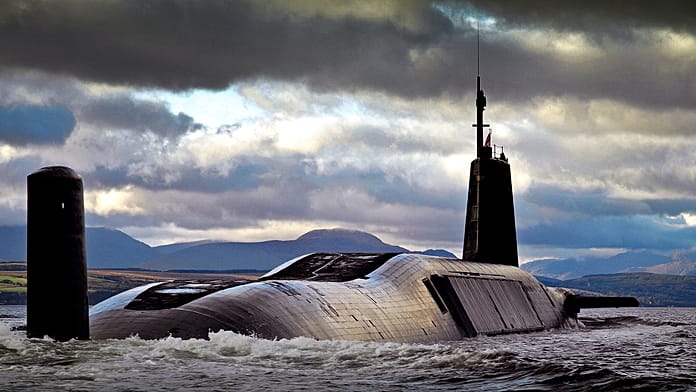
The Royal Navy's HMS Vengeance nuclear submarine has set a new record by completing a 217-day mission. For about seven months, the crew had almost no contact with the outside world.
In brief
HMS Vengeance, one of the Royal Navy's nuclear armed submarines, has returned to Scotland after completing a 217 day deployment.The submarine has beaten the 205 day record for a deployment set by HMS Vanguard in April.However, these two back to back records are seen less as a display of the Royal Navy's strength and more as a sign of problems within the nuclear submarine fleet.According to experts, the steadily lengthening deployments are linked to delays in completing maintenance on ageing submarines and to the heavy psychological pressure on personnel.Designed for three month missions, now staying underwater for sevenNuclear submarine specialist David Cullen told UK daily The Guardian o…
This is the opening of the story, shared with credit to Euronews. The rest of the report — with every detail — continues on the publisher’s website.
Continue reading at Euronews ↗