📰 Newspapers

Ukraine: Kyiv metro stations become overnight shelters amid air raids

Ukraine: Kyiv metro stations become overnight shelters amid air raids

Residents of Kyiv, Ukraine, sought refuge in underground metro stations overnight on Thursday 19 November 2026, as repeated air raid alerts warned of further Russian attacks on the capital. Strikes on the Ukrainian capital killed at least one person, injured five and damaged two embassies.

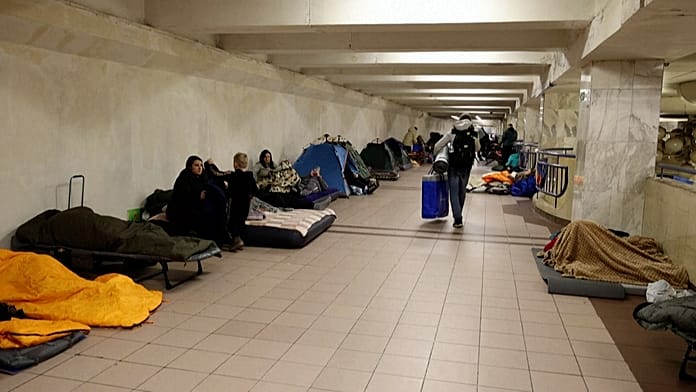
Carrying bags and personal belongings, Kyiv residents filed down into the capital’s metro stations to spend the night underground, pitching makeshift tents and laying out inflatable mattresses along the platforms as air-raid sirens warned of incoming missiles and drones. Above ground, a large-scale Russian assault killed at least three people and injured at least 15, according to updated tolls from Mayor Vitali Klitschko, while damaging residential buildings, a landmark cathedral, bridges across the Dnipro River and the Austrian, Dutch and Brazilian embassies.

All diplomatic staff escaped without injury, though an explosion blew out windows and damaged cars at the Austrian embassy while staff were inside, and a nearby projectile impact caused light damage to the Dutch mission. The barrage came shortly after Russian President Vladimir Putin vowed that Moscow would answer Ukraine’s strikes on the Crimean Bridge with retaliation that would be “much more painful”.

Throughout the conflict, Kyiv’s metro network has served as an indispensable subterranean sanctuary, offering protection to civilians whenever Russian attacks put homes, offices and urban infrastructure in the crosshairs.

In brief

Carrying bags and personal belongings, Kyiv residents filed down into the capital’s metro stations to spend the night underground, pitching makeshift tents and laying out inflatable mattresses along the platforms as air-raid sirens warned of incoming missiles and drones. Throughout the conflict, Kyiv’s metro network has served as an indispensable subterranean sanctuary, offering protection to civilians whenever Russian attacks put homes, offices and urban infrastructure in the crosshairs.

This is the opening of the story, shared with credit to Euronews. The rest of the report — with every detail — continues on the publisher’s website.

Continue reading at Euronews ↗

Cookie settings

Choose which cookies we may use. You can change this at any time from Cookie settings in the footer. Details of each cookie are in the Cookie Policy.

Strictly necessary

Needed for sign-in, security, payments and remembering these choices. Always on.

Preferences

Remember settings such as dark mode.

Analytics & performance

Help us count visits, understand which pages, devices and countries our readers use, and measure how well the site performs – anonymous and aggregated.

Advertising & marketing

Lets advertising partners show and personalise adverts, measure impressions, clicks and visits, prevent ad fraud and pay us – this is how the free site is funded.

🔔 News notifications

Get headlines from NewsHub on this device — even when the site is closed.

You can switch this off at any time. Works on Android, Windows, Mac and Linux browsers; on iPhone/iPad add the site to your Home Screen first.