📰 Newspapers

Have we missed our chance to stop climate change?

Have we missed our chance to stop climate change?

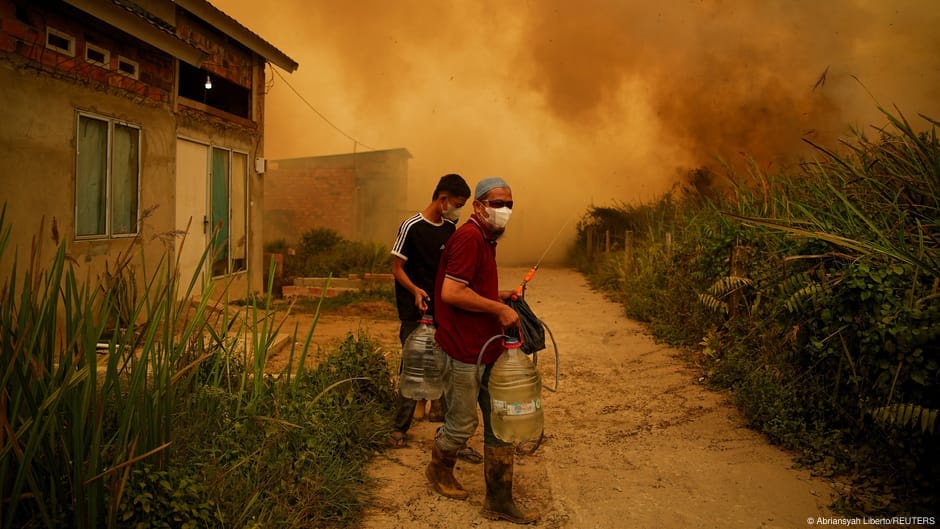
From record-breaking heat to devastating floods and wildfires, the warning signs are everywhere. Can rising temperatures still be brought under control?

When world leaders agreed to do what they could to stop the world from overheating back in 2015, it was heralded as a victorious moment. Hope rippled from Paris, where the historic deal was made.

Since then, efforts to curb the use of planet-warming fossil fuels have achieved some success, with coal, oil and gas falling to a record low share of global primary energy supply. But they still account for around 86% of the world's energy.

"We're still burning stuff like [it's] the 19th century," Mark Maslin, professor of Earth System Science at University College London, told DW.

And that has consequences. The United Nations now says overshooting the temperature threshold agreed in Paris 11 years ago is inevitable. That means even more extreme weather events, like storms, flooding, droughts and deadly heat waves and resultant crop failures and water shortages across the world.

The impacts are already being felt globally. This summer, Europe alone recorded 50,000 heat-related deaths in urban areas. In Delhi, India, summer heat waves saw temperatures soar above 45 degrees Celsius (113 Fahrenheit). Even in the relative cool of the evening, there was little respite.

"It feels like your eyes are burning," said Disha Ravi co-founder of the India chapter of youth climate movement Fridays for Future (FFF).

In brief

When world leaders agreed to do what they could to stop the world from overheating back in 2015, it was heralded as a victorious moment. That means even more extreme weather events, like storms, flooding, droughts and deadly heat waves and resultant crop failures and water shortages across the world. In Delhi, India, summer heat waves saw temperatures soar above 45 degrees Celsius (113 Fahrenheit).

This is the opening of the story, shared with credit to DW — Top stories. The rest of the report — with every detail — continues on the publisher’s website.

Continue reading at DW — Top stories ↗

Cookie settings

Choose which cookies we may use. You can change this at any time from Cookie settings in the footer. Details of each cookie are in the Cookie Policy.

Strictly necessary

Needed for sign-in, security, payments and remembering these choices. Always on.

Preferences

Remember settings such as dark mode.

Analytics & performance

Help us count visits, understand which pages, devices and countries our readers use, and measure how well the site performs – anonymous and aggregated.

Advertising & marketing

Lets advertising partners show and personalise adverts, measure impressions, clicks and visits, prevent ad fraud and pay us – this is how the free site is funded.

🔔 News notifications

Get headlines from NewsHub on this device — even when the site is closed.

You can switch this off at any time. Works on Android, Windows, Mac and Linux browsers; on iPhone/iPad add the site to your Home Screen first.