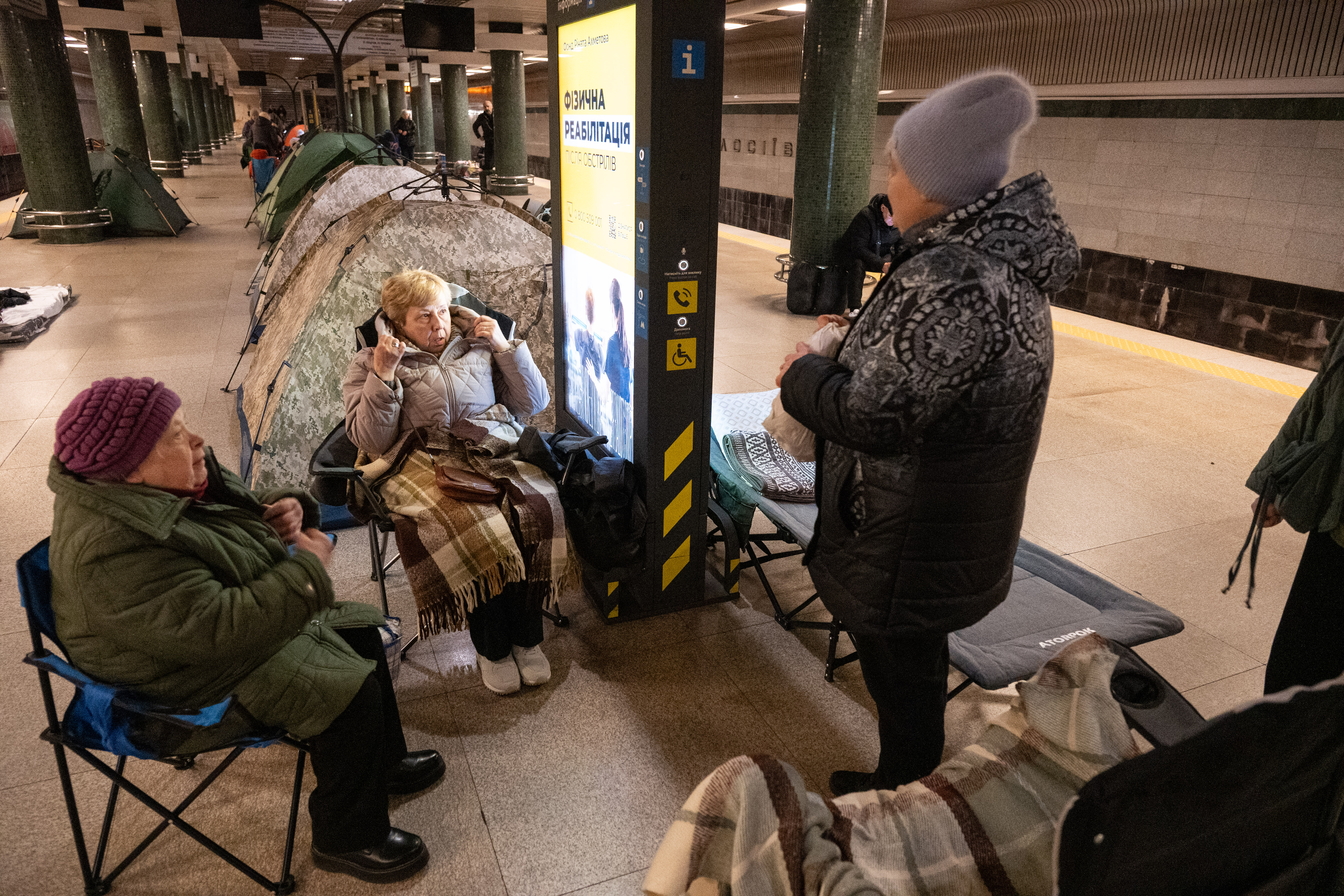
KYIV: Wrapped in her puffer jacket and woollen hat, Katerina Liubychenko pitched her tent on the freezing marble floor.
With her husband and toddler, Alisa, she planned to spend the night underground. It promised to be a long one.
Monitoring channels on social media forecast a massive Russian air strike was looming.
The family, who live on the tenth floor of an apartment block in the capital’s northern suburbs, decided not to take any risks.
“It’s mainly so our daughter hears fewer explosions,” the 32-year-old mother said.
“We get here at her bedtime. She plays a bit, we read her a book, then she falls asleep.”
Alisa bounced on the inflatable mattress that her father was trying to pump up, teasing him with a torch and laughing.
The two-year-old does not fully comprehend what is going on — but she understands enough.
“She knows that an alert means there is danger and that you have to hide... at nursery, they are used to it,” her mother said.
“It’s heartbreaking to have to stop our children from living their lives, when we have to explain to them that they can’t do this or go for a walk there.”
Around them, the Akademmistechko metro station was filling up.