

Researchers have found that cats are remarkably good at getting human attention and adapting their communication to us. They rely on a mix of voice, eye contact and body language. And we humans apparently enjoy falling for it.Purring with a built-in appealParticularly interesting is a study from the University of Sussex published in 2009. Researcher Karen McComb and her team examined how cats use purring when they want food.They discovered a special variant of purring known as "solicitation purring", a kind of demanding purr. The cat uses an acoustic trick that works surprisingly well on its human housemate.This insistent purring combines the familiar deep rumble with a high-frequency tone that resembles a baby's cry. Test subjects experienced this type of purring as more urgent and less soothing than ordinary purring. Apparently we react especially sensitively to sounds that remind us of a baby's cries for help.Friendly slow blinking, body language is part of the repertoire tooCats not only use their voices cleverly, their eyes also play an important role in communication.A study published in 2020 in the journal Scientific Reports looked at what is known as slow blinking. In this behaviour cats first narrow their eyes slightly and then close them for a brief moment.Cats also responded to slow blinking from their humans and often blinked back.
Researchers find cats cleverly tailor communication to win human attention
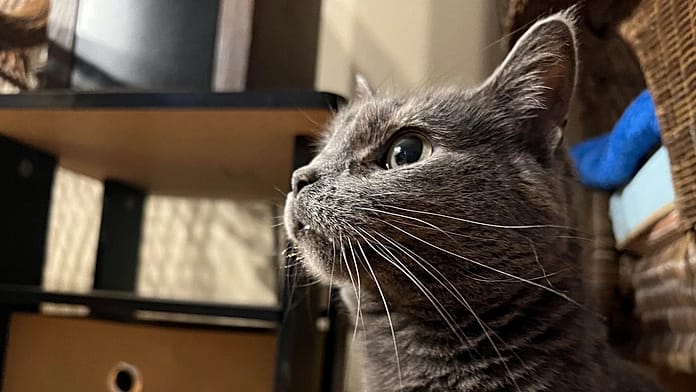
A heart-rending meow, a cute purr or an innocent look from big eyes: cats clearly know how to attract their humans' attention. Scientific studies show they use astonishingly sophisticated communication strategies.
In brief
Researchers have found that cats are remarkably good at getting human attention and adapting their communication to us. Researcher Karen McComb and her team examined how cats use purring when they want food.They discovered a special variant of purring known as "solicitation purring", a kind of demanding purr. Test subjects experienced this type of purring as more urgent and less soothing than ordinary purring.
This is the opening of the story, shared with credit to Euronews. The rest of the report — with every detail — continues on the publisher’s website.
Continue reading at Euronews ↗