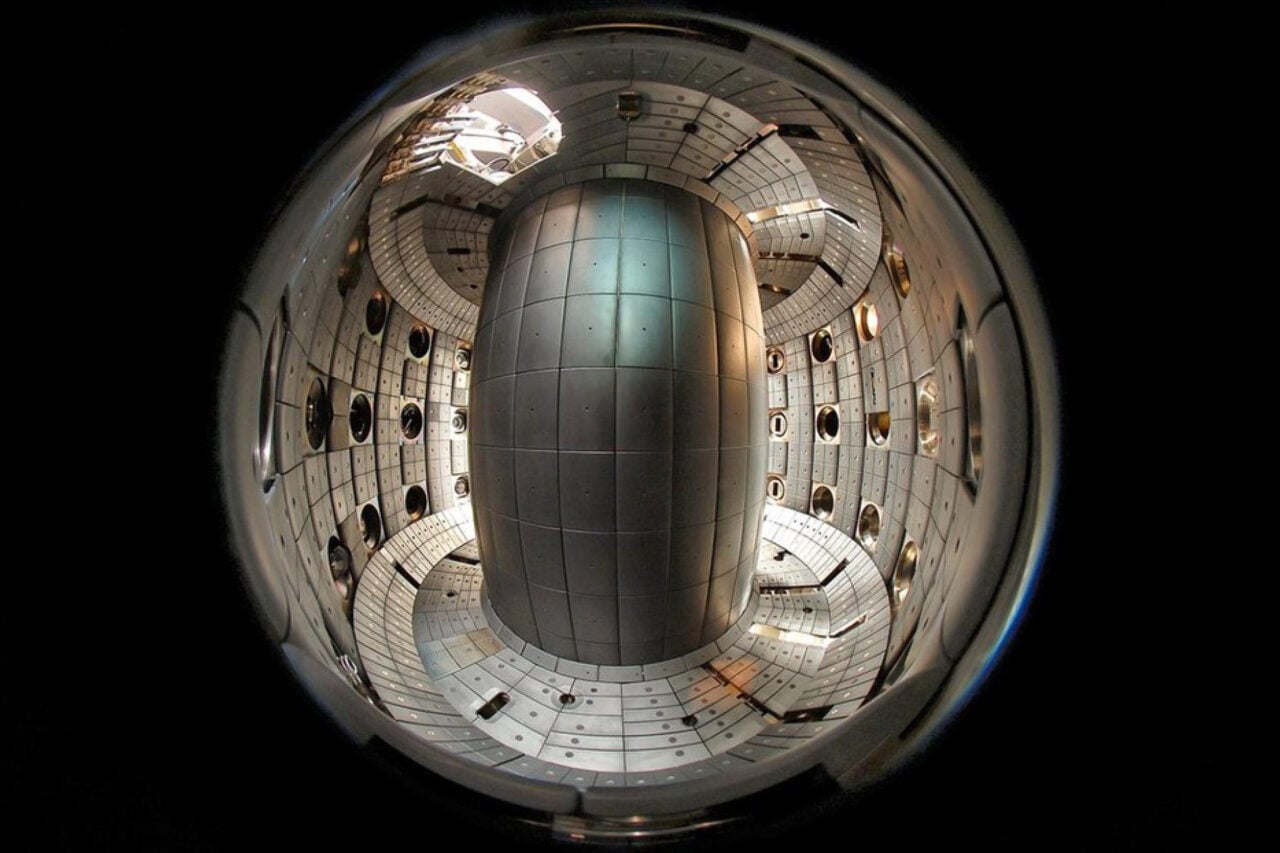
In 1982, scientists identified a process in which the plasma for fusion reactions turns from low confinement (L-mode) to high confinement (H-mode). Entering H-mode enabled the plasma to more effectively retain energy. However, in the decades since, experts struggled to pin down the heating power required to trigger this transition—until now.
In a paper recently published in Physical Review Letters, physicists at the Swiss Federal Institute of Technology in Lausanne (EPFL) report a new framework to reliably predict the heating power required to reach H-mode. The model considers both the plasma density and the direction of the magnetic field in the tokamak, a donut-shaped instrument in fusion reactors that confines plasma with powerful magnetic fields. It also provides better perspective on why, upon entering H-mode, turbulence at the plasma’s edge drops sharply.
To be clear, the threshold for H-mode varies depending on reactor design and isn’t a universal number. The model offers a way to get a fairly good sense of what that particular threshold is for a reactor. Brenno De Lucca, a doctoral assistant at EPFL’s Swiss Plasma Center, led the research.
The framework is based on real recorded physical processes from existing tokamak experiments and “explains why the required power increases with density in one regime but decreases in another, producing a density at which the heating requirement…