

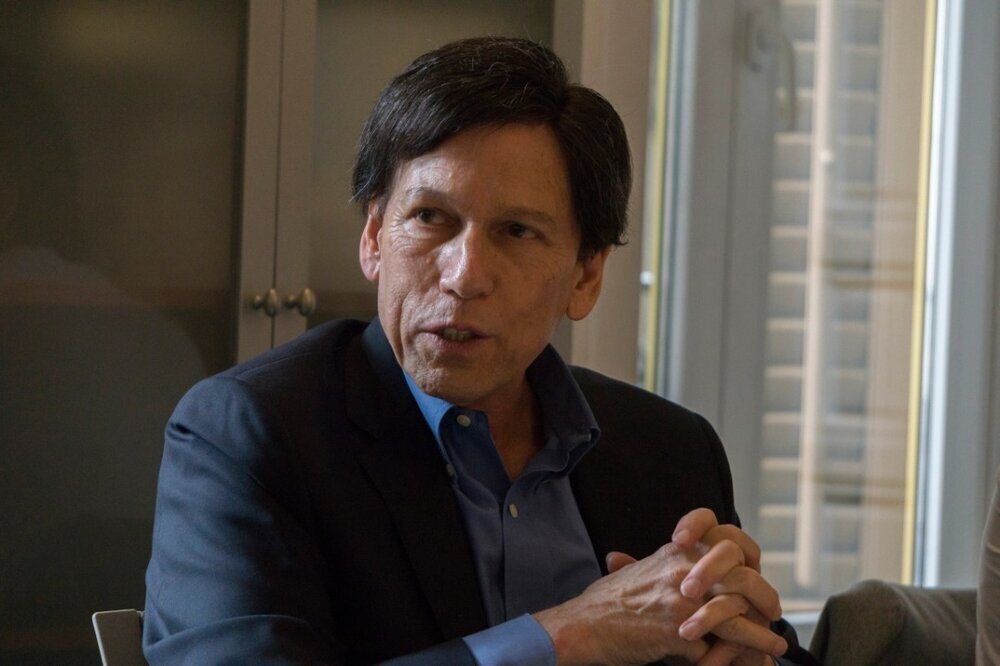
TEHRAN– Peter Kuznick, Professor of History and Director of the Nuclear Studies Institute at American University, says the war on Iran carries an unacceptable risk of nuclear escalation.
The arrival of the USS Theodore Roosevelt in the West Asia region has brought the number of U.S. aircraft carriers operating in the region to three, as tensions continue to rise over the U.S.-Israeli war on Iran. Tehran has warned that it would not necessarily wait for Washington to launch another attack before responding. The latest developments come amid mixed signals from the Trump administration. U.S. President Donald Trump has told advisers that he may hold off on further strikes if Iran and Yemen’s Ansarullah do not engage in new provocations. The combination of a reinforced U.S. military presence and uncertainty over Washington’s next move has left the prospects for de-escalation unclear.
Against this backdrop, concerns over the risk of a wider conflict—and its potential nuclear consequences—have taken on renewed urgency. In an interview with Mehr News Agency, American historian and American University professor Peter Kuznick warned that even the possibility of a U.S. or Israeli nuclear strike against Iran represents an unacceptable risk. He stressed that the war could have far-reaching implications beyond the regional military balance, undermining the credibility of the global nuclear non-proliferation regime, exposing the limits of U.S.…