

Its vast power buildout could help bridge the “electron gap”. The Straits Times examines the imbalance and how it is reshaping the AI rivalry.
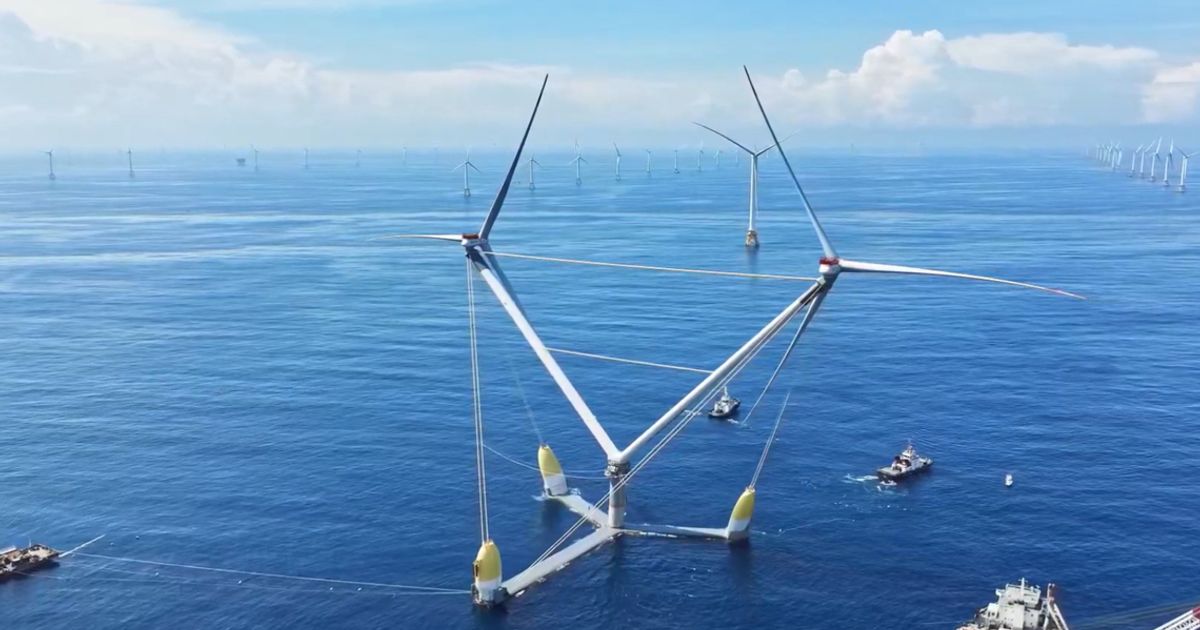
BEIJING/BANGKOK – Rising from a floating platform 70km off China’s southern coast, two giant wind turbines perched on a V-shaped frame stand as tall as a 73-storey building. Whirring at full speed, they can generate enough power a year to supply 30,000 households.
Tethered to the ocean floor by three heavy cables, Ming Yang Smart Energy’s OceanX, which took The Straits Times a bumpy five-hour round trip to reach by speedboat, is designed to tap the stronger, steadier winds in deep offshore waters.
OceanX already generates the most power of any floating wind platform – according to the China Classification Society, a state-owned enterprise that sets technical rules for ships and offshore installations – and at what the company says to be a fraction of the cost of its American and European competitors.
Having successfully passed technical reviews including weathering three Category 5 super typhoons, Ming Yang plans to break its own record and commission an even larger floating twin turbine platform with a total capacity of 50MW – triple that of OceanX – as early as 2027.
“What we can do is something other countries, including the US, cannot copy or surpass,”