LONDON: On Thursday, a clash between Iraqi government forces and Kataeb Hezbollah in the militia’s stronghold of Jurf Al-Sakher seemed all but inevitable.
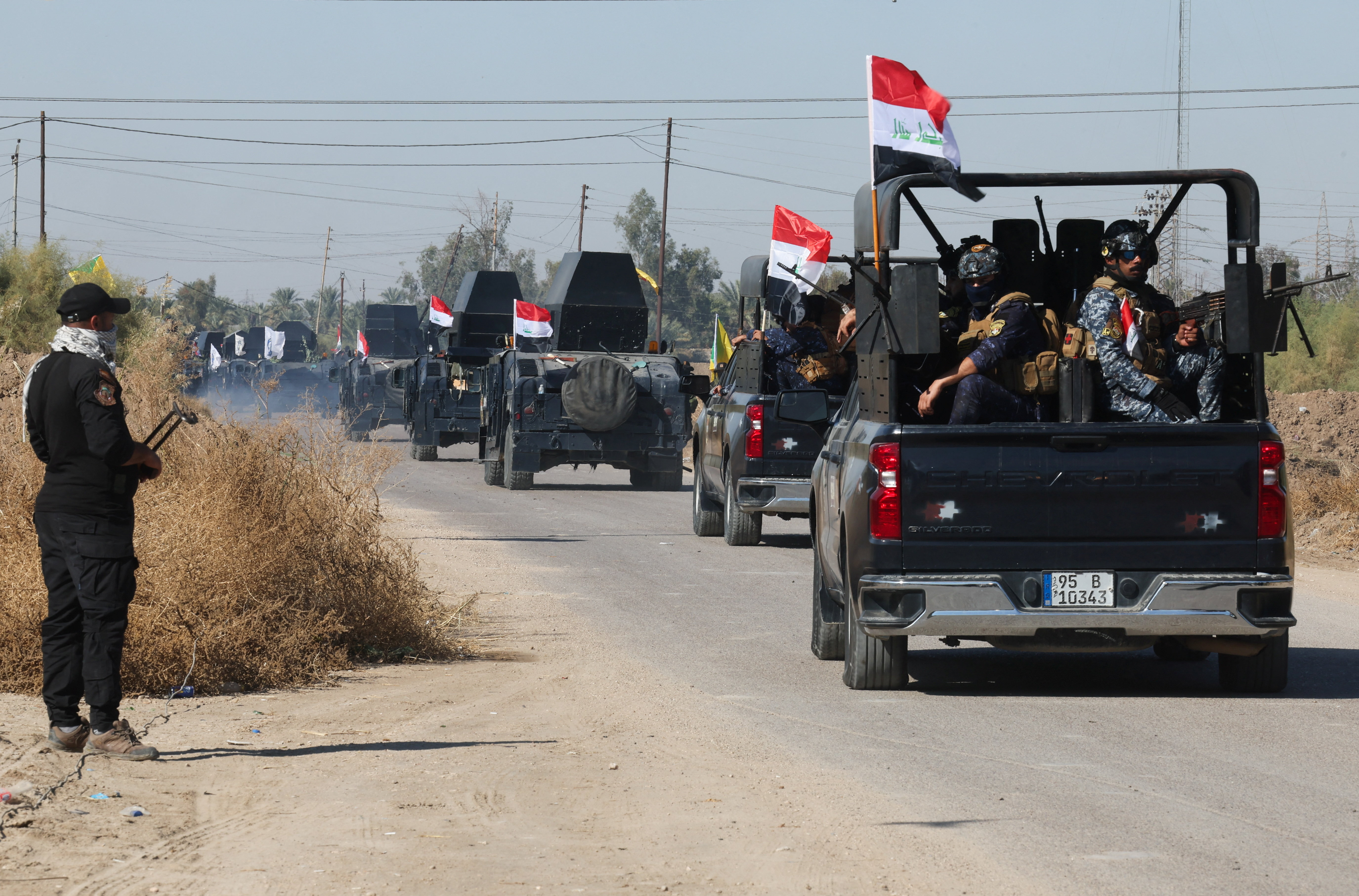
Iraq’s government, which had accused the Iran-backed militia of stealing oil and smuggling it out of the country on an industrial scale, had reportedly given it until Friday to leave the area. Government forces were massing outside the district.
Kataeb Hezbollah’s response was seemingly unequivocal. A senior commander vowed the group would be going nowhere, accused Iraqi Prime Minister Ali Al-Zaidi of being “an adventurer heading toward inciting discord” and warned that Iraq was “on the cusp of a major crisis.”
By Friday morning, however, everything had apparently changed.
Iraqi security forces announced they had begun assuming responsibility for security in Jurf Al-Sakher, with elements of the state’s paramilitary Energy Police moving in to protect oil and energy infrastructure.
The commander of the Energy Police, Lt. Gen. Hamid Al-Husseini, said his men had begun securing the 441-km section of the country’s 9,000 km of oil pipelines that passes through the area, and were working with military units to set up security checkpoints every 500 meters.
Jurf Al-Sakher, a predominantly Sunni town in Babil province also known as Jurf Al-Nasr, was recaptured from Daesh in 2014 by government troops aided by Shiite militiamen, including Kataeb Hezbollah.