While the ancient Romans typically built their cemeteries outside of their cities, it’s not uncommon for archaeologists to come upon a small number of burials inside a Roman settlement. But what came to light in Wendover, England, was something different altogether.
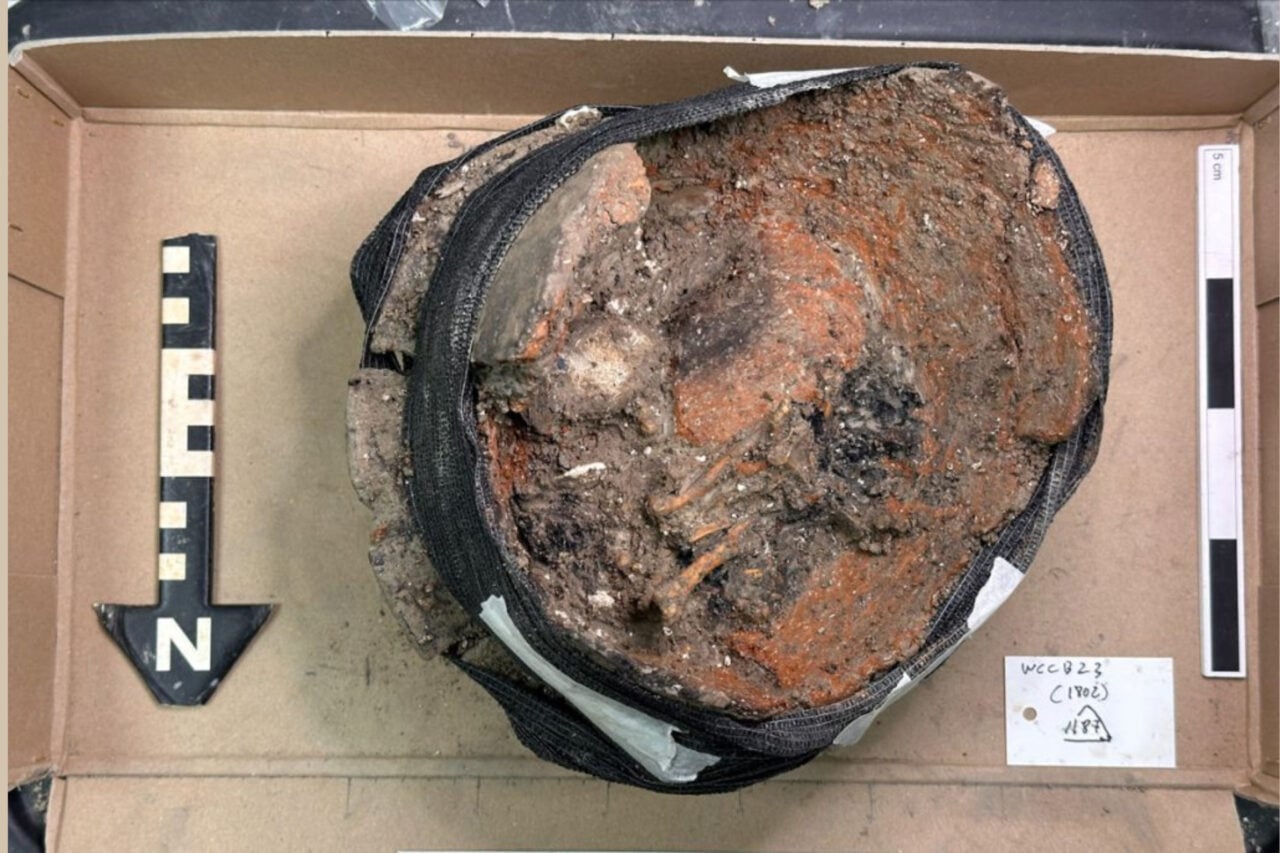
Archaeologists unearthed nine burials in a Roman settlement, according to a recent statement by Cotswold Archaeology. One of these consisted of the remains of an infant, a hen, and a small bird inside a pottery vessel buried into the ground upside-down. The discovery, which likely dates back to the early 3rd to early 4th century CE, might be a first of its kind for Britain.
The burials emerged during archaeological work carried out before the construction of the new Wendover Cricket Ground. Four were cremation burials of adults, and five were inhumation burials of infants and young children. The infant burials weren’t entirely surprising—if a baby died before its first birthday during the Roman period, it was relatively common for them to be buried in or near domestic buildings. Archaeologists have also discovered them in boundary ditches. Interestingly, these burials have some association with corn dryers (used to dry out corn and grain).
One of the infant burials, however, is particularly notable: a pottery vessel with the remains of a nine-month-old child at its bottom and the remains of…