

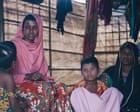
Survivors recount rivers red with blood and burning nearby villages serving as an urgent warning to flee their homes
Smoke was often the signal to run – seen from a distance, it was the indication for Rohingya that a neighbouring village was under attack and that theirs would be next.
In other places, they saw the rivers run red and would pull out the bodies, perform quick burial rites and then flee.
What happened during the escape from Myanmar – a journey through forests and over hills and rivers while being battered by monsoon rains – was a key part of the ruling made this week in The Hague that Myanmar had carried out a genocide against the Rohingya.
The international court of justice (ICJ) said it was not enough to say they had faced ethnic cleansing when soldiers had also killed those trying to escape – Myanmar was trying to destroy the group as a people.
Stories of that violence in 2017, of organised mass killing, sexual attacks and the complete destruction of their villages, came with the refugees who arrived in neighbouring Bangladesh, eventually numbering more than 700,000 and settling in what has become the world’s largest refugee camp.
For months, they would arrive from places such as Tula Toli, where thousands were rounded up, killed and buried…


