

Invented more than 2,000 years ago, the “Archimedes screw” machine is a giant corkscrew with a spiral blade that rotates around its axis to pump water uphill or transfer heavy bulk materials like grain or gravel.In recent decades, engineers have also used this ancient invention to work in reverse, using it as a turbine in hydroelectric power plants where flowing water forces the screw to spin and generate electricity.Now, researchers at the Weizmann Institute of Science in Rehovot and their international colleagues have created a molecular version of the famous screw and uncovered a surprising two-way relationship between electric current and rotational motion.Surprises during researchWhen an electric current causes the single molecule to spin, that rotation, in turn, dramatically enhances electrical conduction, boosting the current flowing through it by up to a hundredfold.The researchers recently published their discovery in the prestigious journal Nature, titled “Current-driven molecular machine with rotation-enhanced conductance.”Working in Prof. Oren Tal's Weizmann laboratory in the chemical and biological physics department, the scientists suspended a single helical, or spiral-shaped, organic molecule between two gold electrodes at a temperature close to absolute zero.When they applied a voltage across the electrodes, they detected cyclical jumps in the electric current flowing through the molecule.
Inspired by Archimedes, Israeli scientists shrink ancient invention to a single molecule
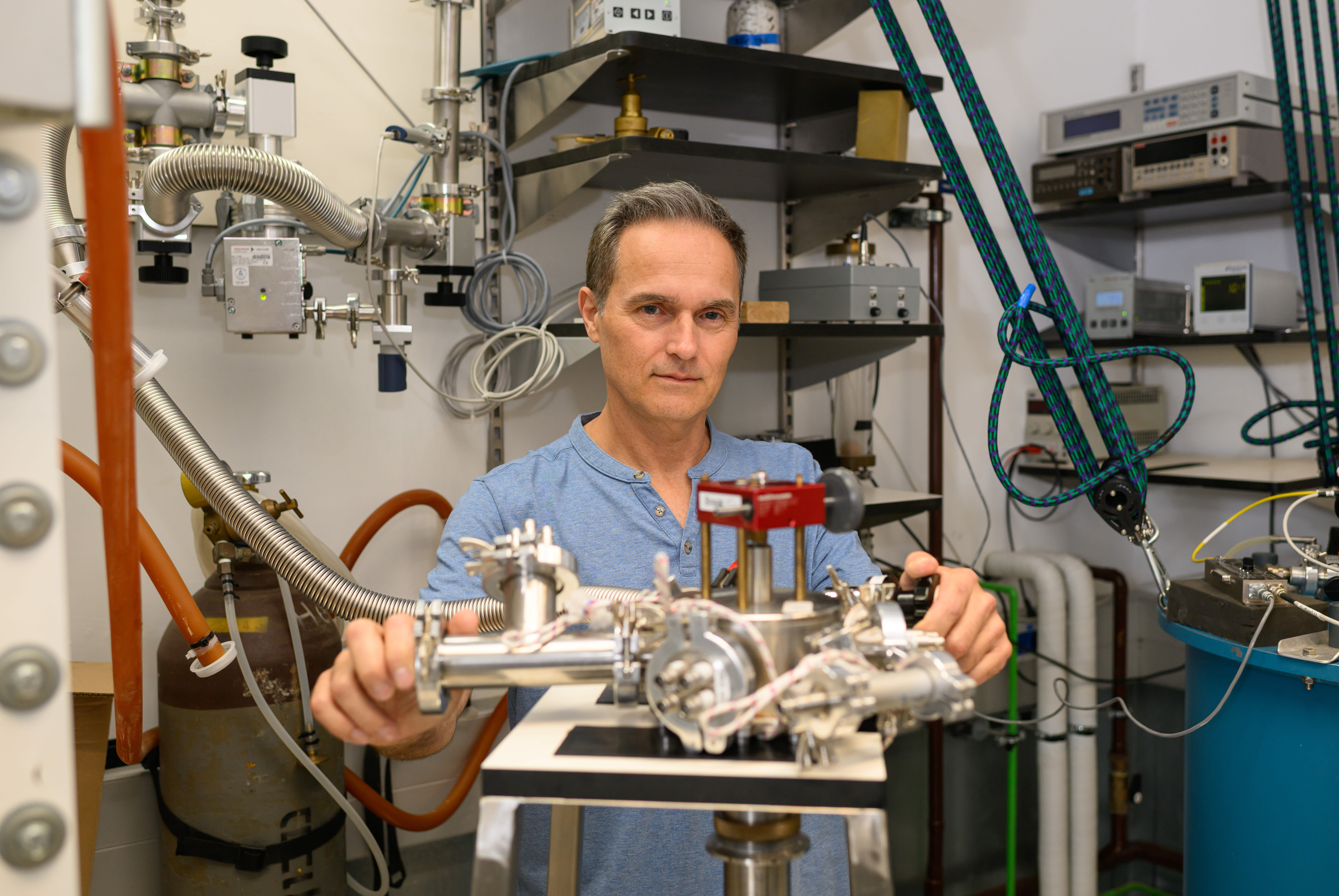
Inspired by the Archimedes screw, a microscopic rotor uses electricity to spin and boosts electrical current up to a hundredfold.
In brief
Invented more than 2,000 years ago, the “Archimedes screw” machine is a giant corkscrew with a spiral blade that rotates around its axis to pump water uphill or transfer heavy bulk materials like grain or gravel.In recent decades, engineers have also used this ancient invention to work in reverse, using it as a turbine in hydroelectric power plants where flowing water forces the screw to spin and generate electricity.Now, researchers at the Weizmann Institute of Science in Rehovot and their international colleagues have created a molecular version of the famous screw and uncovered a surprising two-way relationship between electric current and rotational motion.Surprises during researchWhe…
This is the opening of the story, shared with credit to The Jerusalem Post. The rest of the report — with every detail — continues on the publisher’s website.
Continue reading at The Jerusalem Post ↗