📰 Newspapers

Can South Korea’s high-stakes Suneung college entrance exam survive the AI era?

Can South Korea’s high-stakes Suneung college entrance exam survive the AI era?

Amid calls for reform, concerns over grading fairness complicate move beyond multiple-choice tests.

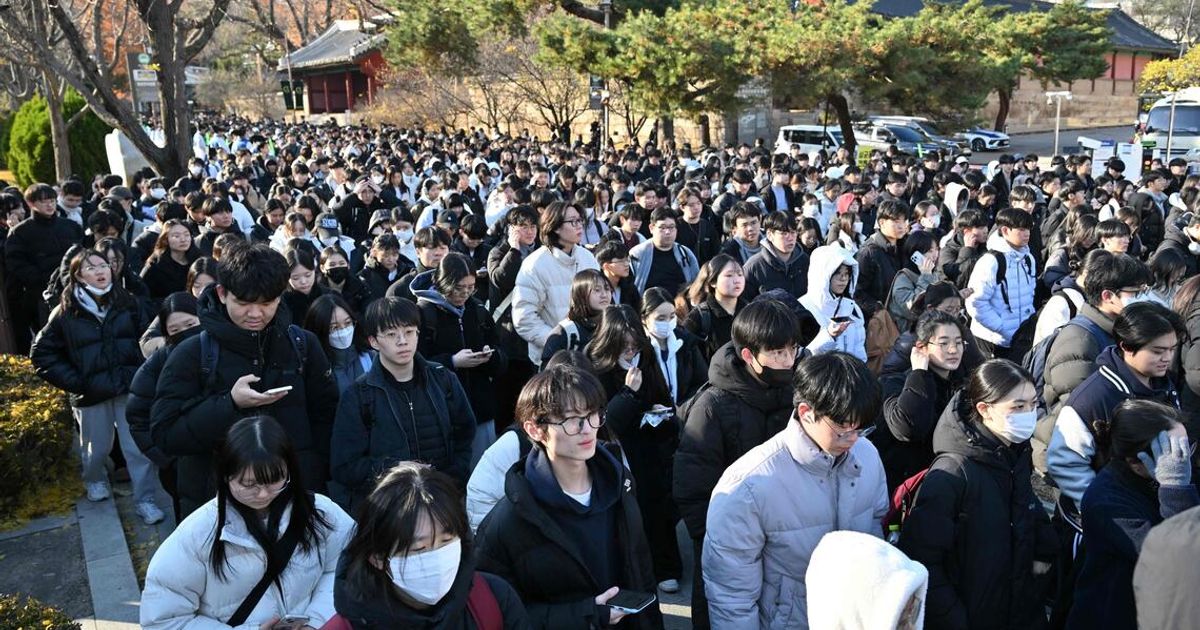
SEOUL – Smart glasses and miniature cameras discovered during South Korea’s college entrance exam have exposed a growing challenge for the country’s high-stakes testing system: How to prevent AI-assisted cheating while ensuring that the exam remains relevant in an age when artificial intelligence can generate answers in seconds.

President Lee Jae Myung on Nov 20 ordered a sweeping review of the national examination system, calling on the authorities to reconsider existing testing methods “from A to Z” after five test-takers were caught in cheating cases involving smart devices during the previous day’s College Scholastic Ability Test, or Suneung.

The incidents have reignited a broader debate over whether South Korea should move beyond its decades-old, multiple-choice-heavy examination system towards assessments that emphasise critical thinking and reasoning.

But replacing multiple-choice questions with essays or other forms of evaluation presents its own challenges, particularly in a country where the Suneung plays a decisive role in university admissions and public confidence in grading fairness remains paramount.

Calls to reform the Suneung predate the latest cheating cases, reflecting concerns that the exam places too much emphasis on finding correct answers rather than developing the skills needed in an AI-driven society.

In December 2025, Seoul education chief Jeong Geun-sik proposed introducing essay-based testing by 2033 and ultimately abolishing the Suneung by 2040.

In brief

SEOUL – Smart glasses and miniature cameras discovered during South Korea’s college entrance exam have exposed a growing challenge for the country’s high-stakes testing system: How to prevent AI-assisted cheating while ensuring that the exam remains relevant in an age when artificial intelligence can generate answers in seconds. The incidents have reignited a broader debate over whether South Korea should move beyond its decades-old, multiple-choice-heavy examination system towards assessments that emphasise critical thinking and reasoning.

This is the opening of the story, shared with credit to The Straits Times — Asia. The rest of the report — with every detail — continues on the publisher’s website.

Continue reading at The Straits Times — Asia ↗

Cookie settings

Choose which cookies we may use. You can change this at any time from Cookie settings in the footer. Details of each cookie are in the Cookie Policy.

Strictly necessary

Needed for sign-in, security, payments and remembering these choices. Always on.

Preferences

Remember settings such as dark mode.

Analytics & performance

Help us count visits, understand which pages, devices and countries our readers use, and measure how well the site performs – anonymous and aggregated.

Advertising & marketing

Lets advertising partners show and personalise adverts, measure impressions, clicks and visits, prevent ad fraud and pay us – this is how the free site is funded.

🔔 News notifications

Get headlines from NewsHub on this device — even when the site is closed.

You can switch this off at any time. Works on Android, Windows, Mac and Linux browsers; on iPhone/iPad add the site to your Home Screen first.