

The world is entering the era of superintelligence, and the AI industry must prioritise safety and human control rather than allowing an unconstrained handover to machines, Meta’s AI chief has warned.Alexandr Wang, Meta’s Chief AI Officer, made the warning in a post on social media platform X on Sunday in light of rival Anthropic’s announcement on Friday that one of their mathematicians had used their Claude AI model to solve the famous Riemann Hypothesis mathematical problem.The hypothesis suggests that the seemingly random appearance of prime numbers actually follows a hidden, strict pattern. Solving the problem could eventually have enormous real-world consequences, by giving certainty to the way prime numbers are distributed, computer systems, for example, can run more quickly and leaner.It comes at a time when global debate over AI has reached fever pitch, with concerns among the public over the risks AI poses not only to jobs and the economy but also to security and human rights.Young people in 20 countries took to the streets on Friday to protest the cost of living, with the lack of AI regulation and fears over autonomous weapons following talks over killer robots also among concerns.The AI chief said he sees the discovery as “marking the beginning of a significant change”
'We should not be okay with a handover of society to AI', warns Meta's AI boss
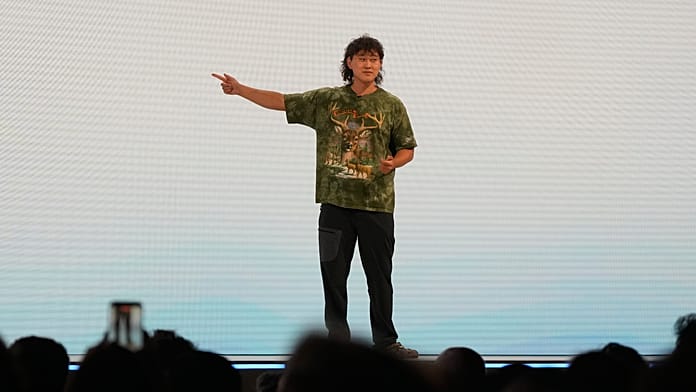
Alexandr Wang has raised concerns over the latest achievements of AI and the risk posed by super intelligent AI models to humanity.
In brief
The world is entering the era of superintelligence, and the AI industry must prioritise safety and human control rather than allowing an unconstrained handover to machines, Meta’s AI chief has warned.Alexandr Wang, Meta’s Chief AI Officer, made the warning in a post on social media platform X on Sunday in light of rival Anthropic’s announcement on Friday that one of their mathematicians had used their Claude AI model to solve the famous Riemann Hypothesis mathematical problem.The hypothesis suggests that the seemingly random appearance of prime numbers actually follows a hidden, strict pattern. Solving the problem could eventually have enormous real-world consequences, by giving certainty…
This is the opening of the story, shared with credit to Euronews. The rest of the report — with every detail — continues on the publisher’s website.
Continue reading at Euronews ↗