📰 Newspapers

Ukraine confirms it used naval drones to strike two Russian ships off Libya

Ukraine confirms it used naval drones to strike two Russian ships off Libya

Ukraine’s security service says seven drones were launched from mothership in operation that sank Merkury warship

Ukraine has confirmed that it deployed naval drones in strikes on two Russian vessels off Libya on Sunday, including one that sank the corvette Merkury, one of Russia’s newest vessels.

Ukraine’s security service, the SBU, said seven domestically-made naval drones were launched from a mothership in the operation, which Volodymyr Zelenskyy described as “exemplary”.

“We continue our operations in designated waters. We are responding to Russia’s aggression. We are developing Ukrainian weapons,” the Ukrainian president added.

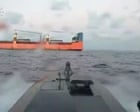
Zelenskyy released video footage, filmed by an approaching drone, showing the drones as they smashed into the side of the warship at its berth in the Benghazi naval base, triggering huge explosions that lit up the night sky.

In its own statement the SBU said: “The defence forces of Ukraine have once again demonstrated that the Russian military fleet and its logistics networks have no safe routes, even far beyond the Black Sea”.

Zelenskyy said the other vessel hit on Sunday, the dry cargo ship MV Angara, was being used by Russia to transport weapons.

The operation, conducted 1,500 miles from the front line in Ukraine, was the latest daring long-range assault by Kyiv’s forces.

In brief

Ukraine’s security service says seven drones were launched from mothership in operation that sank Merkury warship Ukraine has confirmed that it deployed naval drones in strikes on two Russian vessels off Libya on Sunday, including one that sank the corvette Merkury, one of Russia’s newest vessels. Ukraine’s security service, the SBU, said seven domestically-made naval drones were launched from a mothership in the operation, which Volodymyr Zelenskyy described as “exemplary”.

This is the opening of the story, shared with credit to The Guardian — Africa. The rest of the report — with every detail — continues on the publisher’s website.

Continue reading at The Guardian — Africa ↗

Cookie settings

Choose which cookies we may use. You can change this at any time from Cookie settings in the footer. Details of each cookie are in the Cookie Policy.

Strictly necessary

Needed for sign-in, security, payments and remembering these choices. Always on.

Preferences

Remember settings such as dark mode.

Analytics & performance

Help us count visits, understand which pages, devices and countries our readers use, and measure how well the site performs – anonymous and aggregated.

Advertising & marketing

Lets advertising partners show and personalise adverts, measure impressions, clicks and visits, prevent ad fraud and pay us – this is how the free site is funded.

🔔 News notifications

Get headlines from NewsHub on this device — even when the site is closed.

You can switch this off at any time. Works on Android, Windows, Mac and Linux browsers; on iPhone/iPad add the site to your Home Screen first.