📰 Newspapers

Barbados town’s three-year deal with Bristol ‘part of the reparative process’

Barbados town’s three-year deal with Bristol ‘part of the reparative process’

Island’s labour minister, Tony Dyer, says agreement acknowledges links between Speightstown and UK city are rooted in slave trade

A town in Barbados known as “Little Bristol” has signed a “twinning’” agreement with the UK city, marking a new chapter in a centuries-long relationship rooted in the transatlantic slave trade.

Barbados says the new partnership between Speightstown and Bristol is part of its wider push for reparatory justice, built in small steps rather than around a multi-trillion-pound claim.

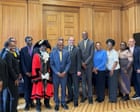
Colin Jordan, the island’s labour minister, signed a three-year memorandum of understanding (MOU) with the Bristol city council leader, Tony Dyer, at City Hall on Friday.

Speightstown is the second-largest town in Barbados. In the 17th and 18th centuries its port shipped sugar, produced by enslaved African people, to Bristol. A bar bearing the name is still a popular venue within the island, Jordan said.

In an interview after the ceremony, Jordan said the agreement sat firmly within the island nation’s wider push for reparations, led by the prime minister, Mia Mottley.

“I see the MOU as part of the reparative process,” he said. “It is doing it in a complementary way because it is focused on the relationships between two towns, two cities, two peoples.”

He was careful with his language. “People get emotive about reparations,”

In brief

Island’s labour minister, Tony Dyer, says agreement acknowledges links between Speightstown and UK city are rooted in slave trade A town in Barbados known as “Little Bristol” has signed a “twinning’” agreement with the UK city, marking a new chapter in a centuries-long relationship rooted in the transatlantic slave trade. Speightstown is the second-largest town in Barbados.

This is the opening of the story, shared with credit to The Guardian — World. The rest of the report — with every detail — continues on the publisher’s website.

Continue reading at The Guardian — World ↗

Cookie settings

Choose which cookies we may use. You can change this at any time from Cookie settings in the footer. Details of each cookie are in the Cookie Policy.

Strictly necessary

Needed for sign-in, security, payments and remembering these choices. Always on.

Preferences

Remember settings such as dark mode.

Analytics & performance

Help us count visits, understand which pages, devices and countries our readers use, and measure how well the site performs – anonymous and aggregated.

Advertising & marketing

Lets advertising partners show and personalise adverts, measure impressions, clicks and visits, prevent ad fraud and pay us – this is how the free site is funded.

🔔 News notifications

Get headlines from NewsHub on this device — even when the site is closed.

You can switch this off at any time. Works on Android, Windows, Mac and Linux browsers; on iPhone/iPad add the site to your Home Screen first.