

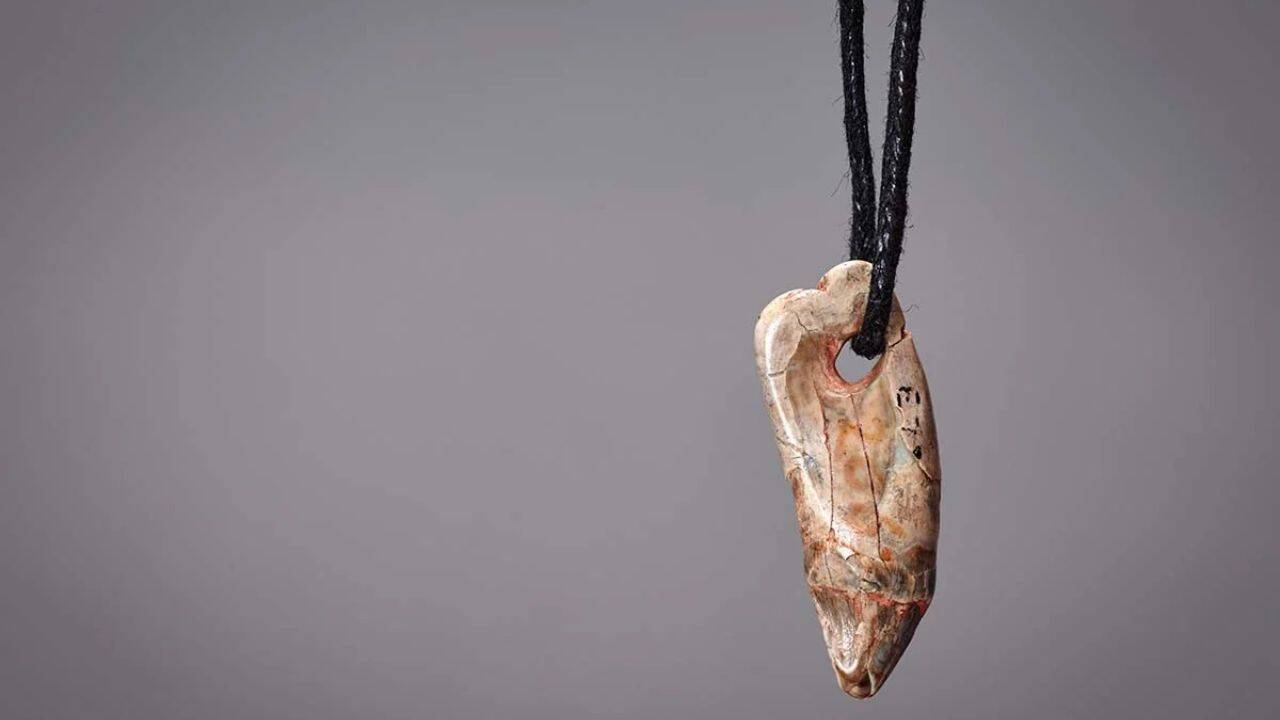
An unidentified object recovered from a British cave during a 19th-century archaeological excavation has finally been recognised as a prehistoric piece of jewellery. Researchers have identified the artefact as a pendant made from the tooth of a grey seal, dating back approximately 15,000 years. The discovery, made at Kents Cavern in Devon, is offering fresh insights into how people living towards the end of the last Ice Age created personal ornaments, travelled across long distances and maintained connections with communities beyond their immediate surroundings.15,000-year-old seal-tooth pendant remained unidentified for more than a centuryThe unusual artefact was originally discovered in 1867 during excavations at Kents Cavern in Torquay, Devon. The archaeological work was led by William Pengelly, whose investigations between 1865 and 1880 helped establish more systematic methods of recording archaeological discoveries in Britain.Despite being recovered alongside other prehistoric finds, the small tooth-shaped object did not attract much attention. It was initially believed to have come from an animal such as a badger, wolf or beaver. Its actual identity remained uncertain for more than 150 years.According to the Natural History Museum, renewed examination of the museum's archaeological collections eventually brought the overlooked object back into focus. Researchers from the Natural History Museum and University College London (UCL) revisited the artefact using modern scientific techniques to understand its origin and purpose.Their investigation…
15,000-year-old seal-tooth pendant reveals ancient human connections in Britain
In brief
An unidentified object recovered from a British cave during a 19th-century archaeological excavation has finally been recognised as a prehistoric piece of jewellery. Researchers have identified the artefact as a pendant made from the tooth of a grey seal, dating back approximately 15,000 years. The archaeological work was led by William Pengelly, whose investigations between 1865 and 1880 helped establish more systematic methods of recording archaeological discoveries in Britain.Despite being recovered alongside other prehistoric finds, the small tooth-shaped object did not attract much attention.
This is the opening of the story, shared with credit to The Times of India — World. The rest of the report — with every detail — continues on the publisher’s website.
Continue reading at The Times of India — World ↗