

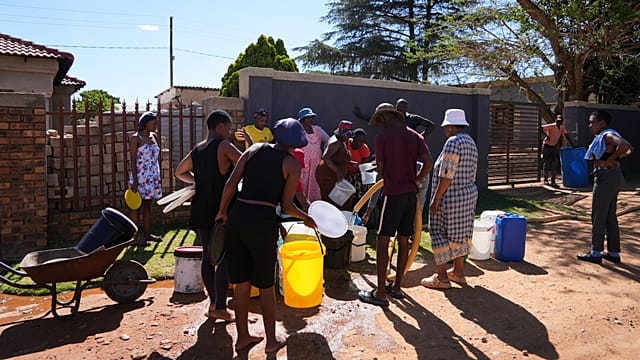
Major cities across South Africa are tightening water restrictions as the strengthening El Niño phenomenon brings hotter, drier conditions, raising the risk of drought and putting additional pressure on already strained water supplies.
Authorities have introduced Level 2 water restrictions across Gauteng Province, including Johannesburg and the Tshwane Metropolitan Municipality, which includes the administrative capital, Pretoria.
Johannesburg's municipal government estimates that daily water consumption needs to be reduced by 200 million litres to stabilise supplies and ease pressure on reservoirs.
Meanwhile, Cape Town is set to introduce Level 1 water restrictions from December 1, requiring a 10-percent reduction in water consumption.
Under South Africa's water restriction framework, Level 1 controls primarily target non-essential outdoor water use, while Level 2 restrictions prohibit residents from using municipal tap water to irrigate gardens and public green spaces. Higher charges also apply to households exceeding their allocated water-use limits.
The restrictions come as the country's weather service warns that the current El Niño event could rank among the strongest on record, with below-average rainfall and above-average temperatures expected over the coming summer months.
Ferrial Adam, executive director of WaterCAN, a Johannesburg-based community action network focused on water quality and related issues, said the combination of climate conditions and ageing infrastructure was intensifying the country's water challenges.