

We’ll be treated to a Supermoon tonight - and it’s set to be big and bright.The night of 23rd to 24th November will see the Beaver Supermoon light up the sky. November’s full Moon is traditionally known as the 'Beaver Moon', a nickname linked to the time of year when beavers prepare for winter by building dams and gathering food.What is a Supermoon?The November 2026 full Moon is a Supermoon, which means it occurs when the Moon is at or near its closest point to Earth. That is possible because its orbit isn't a perfect circle. Instead, it's elliptical, or slightly egg-shaped.That means the distance between the two bodies varies. When the Moon is at its closest point to Earth, it's at perigee. When the Moon is furthest from Earth, it's at apogee.The technical name for a Supermoon is a perigee full Moon, and it can appear up to 14 per cent larger and 30 per cent brighter than a full Moon at apogee.How to watch a Supermoon - and the best time to see itA Supermoon can be seen in clear night skies without any special equipment.Try to find a wide, open space, preferably one that's elevated, such as up a hill.It's such an exciting spectacle because, whether a Supermoon or not, the Moon appears bigger when it's close…
The Beaver Supermoon rises tonight: Where and when to see the lunar spectacle in Europe
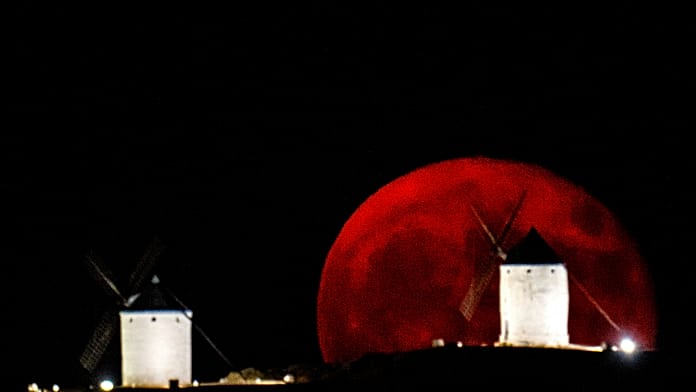
It's worth going outside to enjoy the Moon tonight - it will look bigger and brighter than usual.
In brief
We’ll be treated to a Supermoon tonight - and it’s set to be big and bright.The night of 23rd to 24th November will see the Beaver Supermoon light up the sky. November’s full Moon is traditionally known as the 'Beaver Moon', a nickname linked to the time of year when beavers prepare for winter by building dams and gathering food.What is a Supermoon?The November 2026 full Moon is a Supermoon, which means it occurs when the Moon is at or near its closest point to Earth.
This is the opening of the story, shared with credit to Euronews. The rest of the report — with every detail — continues on the publisher’s website.
Continue reading at Euronews ↗