📰 Newspapers

Researcher who helped improve melanoma survival rates among winners of top Australian science prize

Researcher who helped improve melanoma survival rates among winners of top Australian science prize

Georgina Long and subatomic physicist Anthony Thomas recognised in Prime Minister’s Prizes for Science

Get our daily political email, free app or daily news podcast

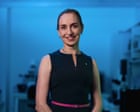
When Prof Georgina Long was starting out in melanoma treatment and research, “my waiting room would change so rapidly”.

Referring to her patients with stage 4 melanoma, the oncologist and medical director at the Melanoma Institute Australia said she wouldn’t “see the same face for more than nine months, 12 months maximum”.

“We’ve flipped that … now over 50% of people are cured with melanoma that once was almost universally terminal,” Long said.

Her research, which has led to effective drug therapies for the cancer, has improved five-year survival rates 10-fold for people with stage 4 melanoma.

In recognition of her pioneering immunotherapy work, Long was one of two researchers awarded the top gong at the Prime Minister’s Prizes for Science on Tuesday night.

The prize was also awarded to Prof Anthony Thomas, a subatomic physicist at the University of Adelaide whose work has “redefined humanity’s understanding of the proton, dark matter and neutron stars, helping unlock the mysteries of the cosmos”.

The predictions of his “cloudy bag model” have led to experiments around the world, he said in a statement, including “to understand the results of supercomputer calculations of quantum chromodynamics”.
In brief

Georgina Long and subatomic physicist Anthony Thomas recognised in Prime Minister’s Prizes for Science Get our daily political email, free app or daily news podcast When Prof Georgina Long was starting out in melanoma treatment and research, “my waiting room would change so rapidly”. Her research, which has led to effective drug therapies for the cancer, has improved five-year survival rates 10-fold for people with stage 4 melanoma.

This is the opening of the story, shared with credit to The Guardian — World. The rest of the report — with every detail — continues on the publisher’s website.

Continue reading at The Guardian — World ↗

Cookie settings

Choose which cookies we may use. You can change this at any time from Cookie settings in the footer. Details of each cookie are in the Cookie Policy.

Strictly necessary

Needed for sign-in, security, payments and remembering these choices. Always on.

Preferences

Remember settings such as dark mode.

Analytics & performance

Help us count visits, understand which pages, devices and countries our readers use, and measure how well the site performs – anonymous and aggregated.

Advertising & marketing

Lets advertising partners show and personalise adverts, measure impressions, clicks and visits, prevent ad fraud and pay us – this is how the free site is funded.

🔔 News notifications

Get headlines from NewsHub on this device — even when the site is closed.

You can switch this off at any time. Works on Android, Windows, Mac and Linux browsers; on iPhone/iPad add the site to your Home Screen first.