Forty-five countries gathered in Rome to discuss who will write the future rules for space. It is a race in which the United States and China are sprinting ahead, private players are gaining ground and Europe still has to close the gap in its capacity for autonomous access to orbit. This is the backdrop to the eighth edition of the International Space Forum, returning to Italy ten years after its debut in Trento.The numbers show how crowded the race has become. In 2026 there are about 18,000 operational satellites around the Earth, almost twice as many as in 2020. And 88 percent of the satellites launched in the past year were linked to private operators, compared with 23 percent in 2010. Space is no longer just a matter for states and government agencies, it is a rapidly expanding market in which major private companies have taken on an increasingly important role.However, the picture of launches also shows just how far Europe still lags behind in terms of autonomy. In 2025 there were 181 American orbital launch attempts and 92 Chinese ones, compared with only eight European launches.
International Space Forum in Rome gathers 45 countries to shape future space rules
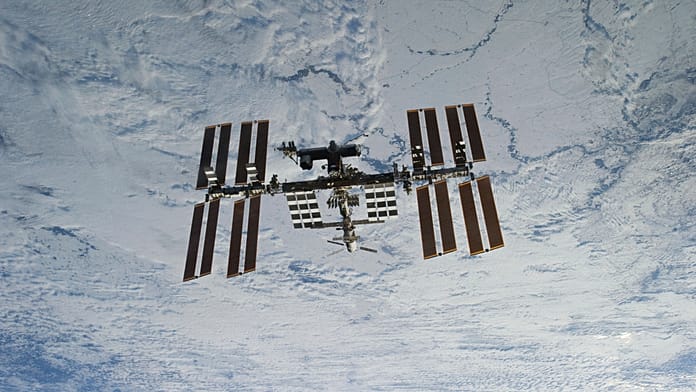
The new orbital economy is worth billions and increasingly involves private operators. Europe is seeking a strategy to avoid losing ground.
In brief
Forty-five countries gathered in Rome to discuss who will write the future rules for space. Space is no longer just a matter for states and government agencies, it is a rapidly expanding market in which major private companies have taken on an increasingly important role.However, the picture of launches also shows just how far Europe still lags behind in terms of autonomy.
This is the opening of the story, shared with credit to Euronews. The rest of the report — with every detail — continues on the publisher’s website.
Continue reading at Euronews ↗