

A spacecraft has entered Mercury's orbit after an eight-year journey, overcoming a technical glitch to continue its mission to conduct scientific observations around the planet. BepiColombo was launched as a joint mission between the European Space Agency and the Japan Aerospace Exploration Agency in October 2018. Since then, it has navigated its way toward Mercury. On Nov. 21, the spacecraft attached itself to Mercury's orbit. The maneuver started with a scheduled, brief loss of contact with the mission control team at the European Space Operations Center in Darmstadt, Germany, the ESA said in a news release. As BepiColombo passed over the planet, it fired four axial thrusters that slowed it enough to lock into Mercury's orbit. During this stage of the mission, the spacecraft came within 400 miles of Mercury's surface. The burn was supposed to last for about 37 minutes. But when the ESA team reestablished contact with BepiColombo, they found the maneuver had been interrupted, causing the spacecraft to enter safe mode, where nonessential activities are stopped. Analysis of trajectory data showed the spacecraft had only completed about 77% of the maneuver. "Upon finding Bepi in safe mode, it was like flipping a switch. Everybody was focused in understanding what had happened," ESA BepiColombo flight operations director Ignacio Tanco said in a statement.
Spacecraft enters Mercury's orbit after 8-year journey despite glitch
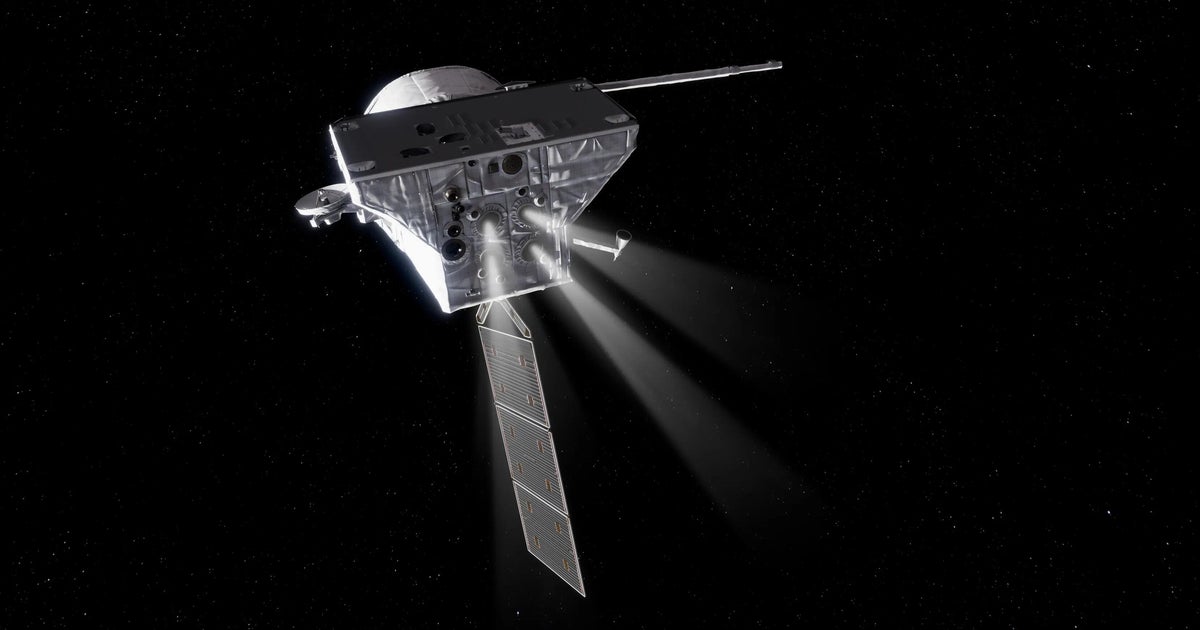
BepiColombo was launched as a joint mission between the European Space Agency and the Japan Aerospace Exploration Agency in October 2018.
In brief
A spacecraft has entered Mercury's orbit after an eight-year journey, overcoming a technical glitch to continue its mission to conduct scientific observations around the planet. 21, the spacecraft attached itself to Mercury's orbit. As BepiColombo passed over the planet, it fired four axial thrusters that slowed it enough to lock into Mercury's orbit. During this stage of the mission, the spacecraft came within 400 miles of Mercury's surface.
This is the opening of the story, shared with credit to CBS News — World. The rest of the report — with every detail — continues on the publisher’s website.
Continue reading at CBS News — World ↗