📰 Newspapers

European court: States can turn back migrants in some cases

European court: States can turn back migrants in some cases

The European Court ruled that states belonging to the Council of Europe can turn back migrants, even under "hostile" conditions unless they've been identified as people who may be subject to ill-treatment.

The European Court of Human Rights on Tuesday ruled that states belonging to the Council of Europe group have a right to control foreign arrivals.

But the 46 member states of the group — that includes all EU and some non-EU countries and promotes democracy and human rights on the continent — must ensure and uphold human rights of people even in hostile environments.

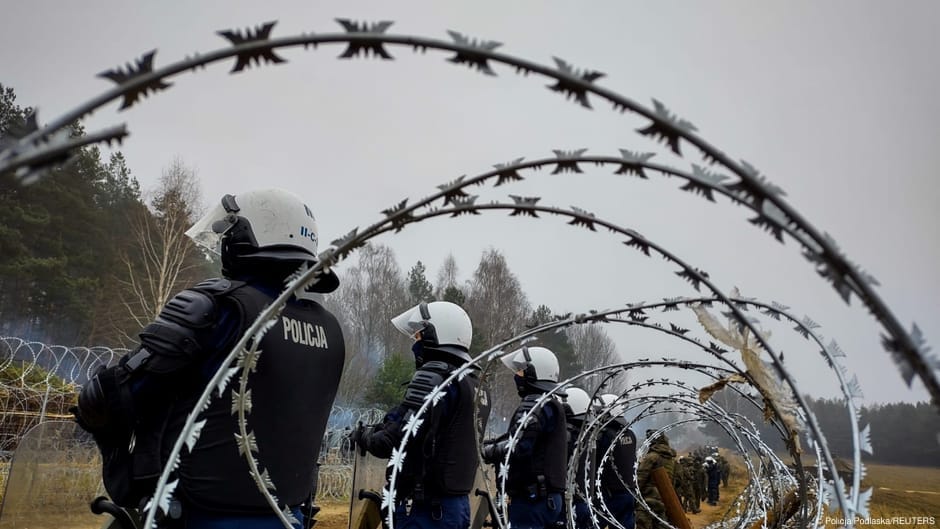
The European court ruling is a complicated one since it deals with a case concerning the entry of nationals of Afghanistan, Iraq and Cuba into EU member countries Poland, Latvia and Lithuania between 2021 and 2022.

That was a time when a border standoff was playing out between Belarus and the EU's eastern member states, with Belarus having been accused of entirely manufacturing a migration crisis to put pressure on the EU.

Belarus arranged for people from various third countries to enter their state and then pointed them to the EU's frontiers.

Europe's most important human rights court on Tuesday ruled that states have a right to control the entry of foreign nationals into their territory even when migration has been weaponized.

The court calls Belarus' hostile actions of 2021 as having been an instance of "instrumentalization of migration."

But the court said that states must still ensure that migrants are protected against inhumane or degrading…

In brief

The European Court of Human Rights on Tuesday ruled that states belonging to the Council of Europe group have a right to control foreign arrivals. Europe's most important human rights court on Tuesday ruled that states have a right to control the entry of foreign nationals into their territory even when migration has been weaponized.

This is the opening of the story, shared with credit to DW — Top stories. The rest of the report — with every detail — continues on the publisher’s website.

Continue reading at DW — Top stories ↗

Cookie settings

Choose which cookies we may use. You can change this at any time from Cookie settings in the footer. Details of each cookie are in the Cookie Policy.

Strictly necessary

Needed for sign-in, security, payments and remembering these choices. Always on.

Preferences

Remember settings such as dark mode.

Analytics & performance

Help us count visits, understand which pages, devices and countries our readers use, and measure how well the site performs – anonymous and aggregated.

Advertising & marketing

Lets advertising partners show and personalise adverts, measure impressions, clicks and visits, prevent ad fraud and pay us – this is how the free site is funded.

🔔 News notifications

Get headlines from NewsHub on this device — even when the site is closed.

You can switch this off at any time. Works on Android, Windows, Mac and Linux browsers; on iPhone/iPad add the site to your Home Screen first.